Faded Barn And Arena Roofs
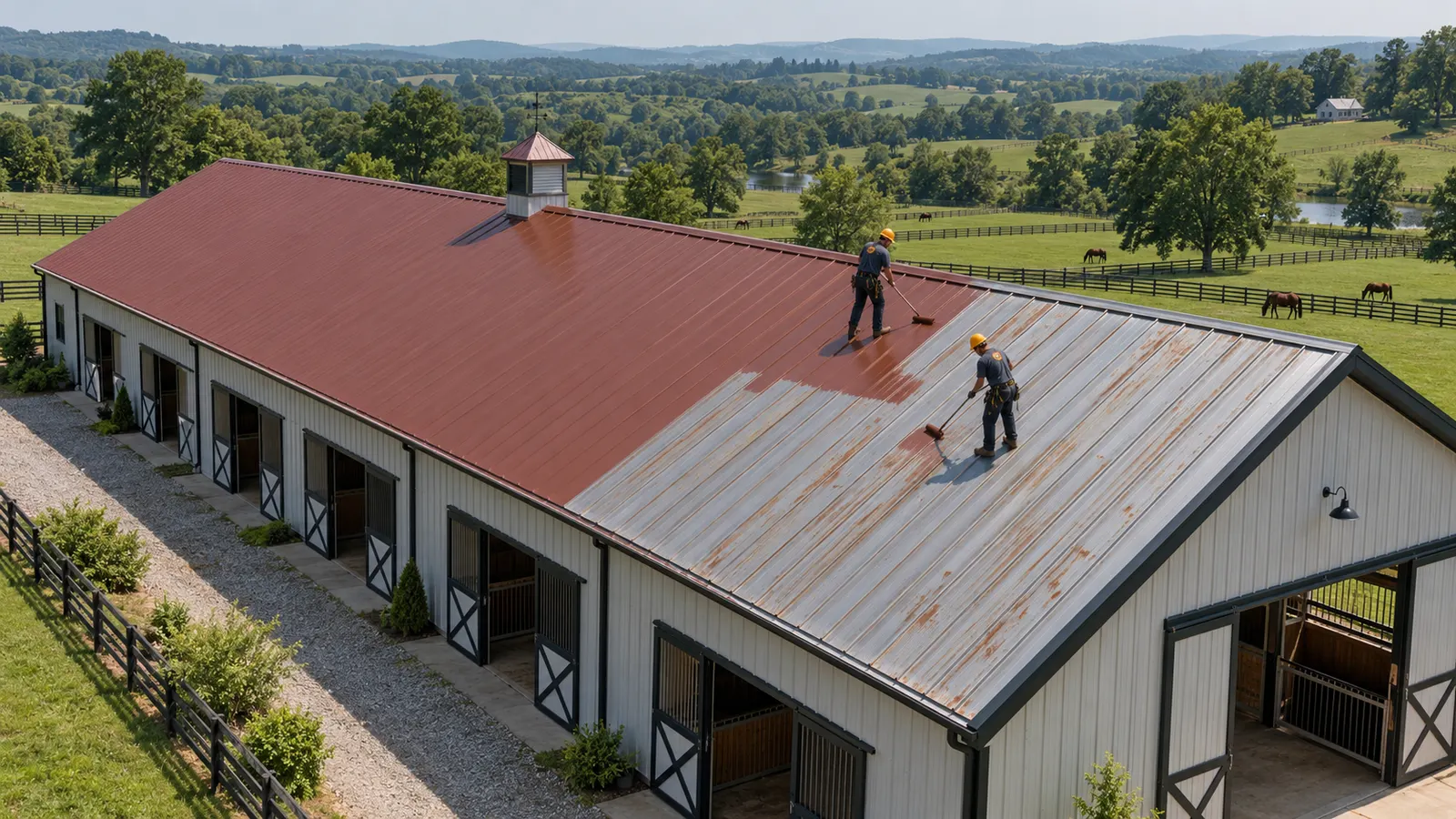
Corrugated steel on horse barns and indoor arenas loses its paint first on the sunny slope. Acrylic restores a bright surface, and ridge vents and cupolas stay masked so the barn keeps breathing.
We apply water-based acrylic roof coating in Lexington to commercial metal roofs that shed rain quickly, including shop roofs, arenas, and barns with real pitch.
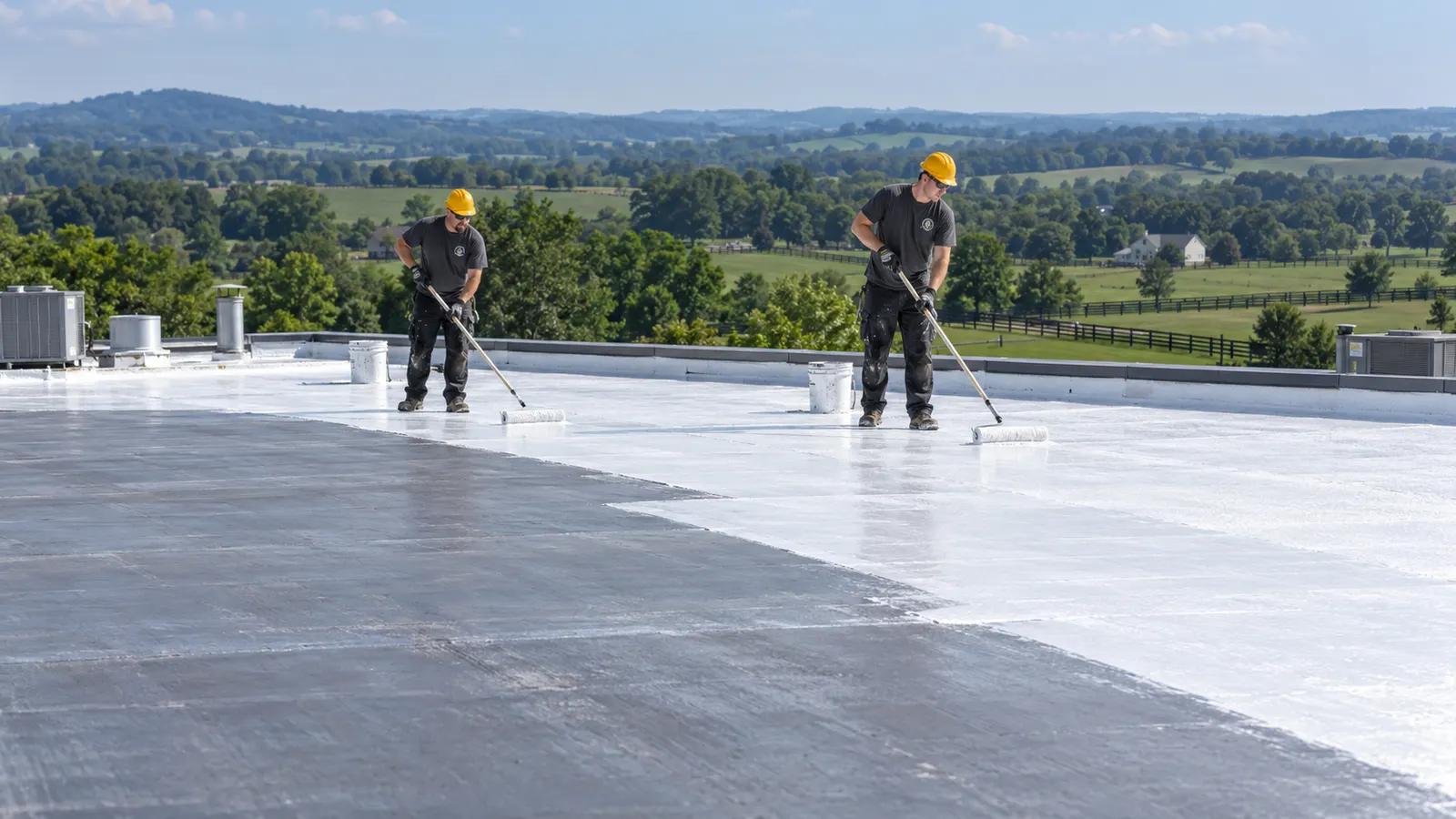
Acrylic rewards a roof that drains. Check how fast yours sheds water after a storm.
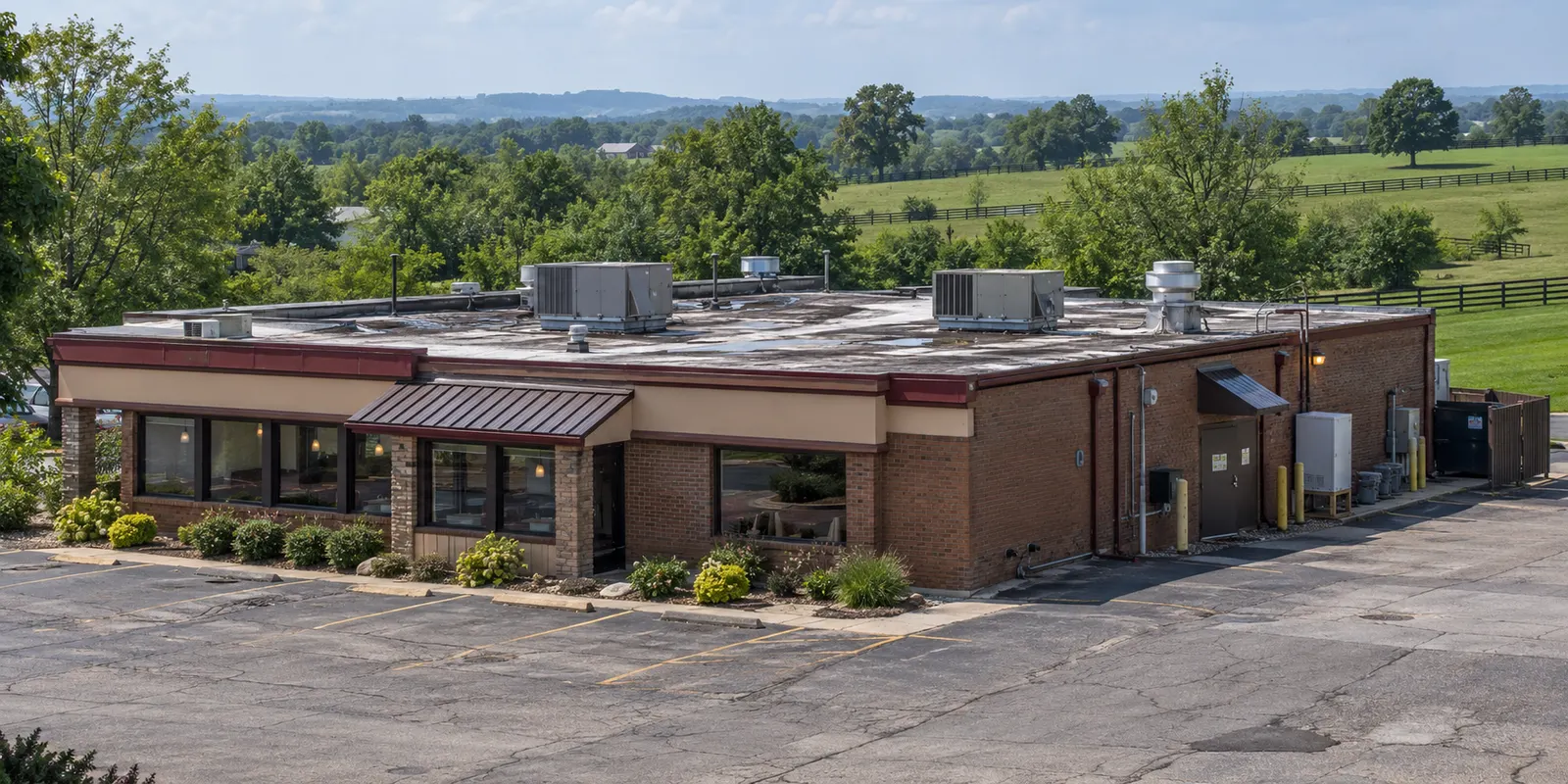
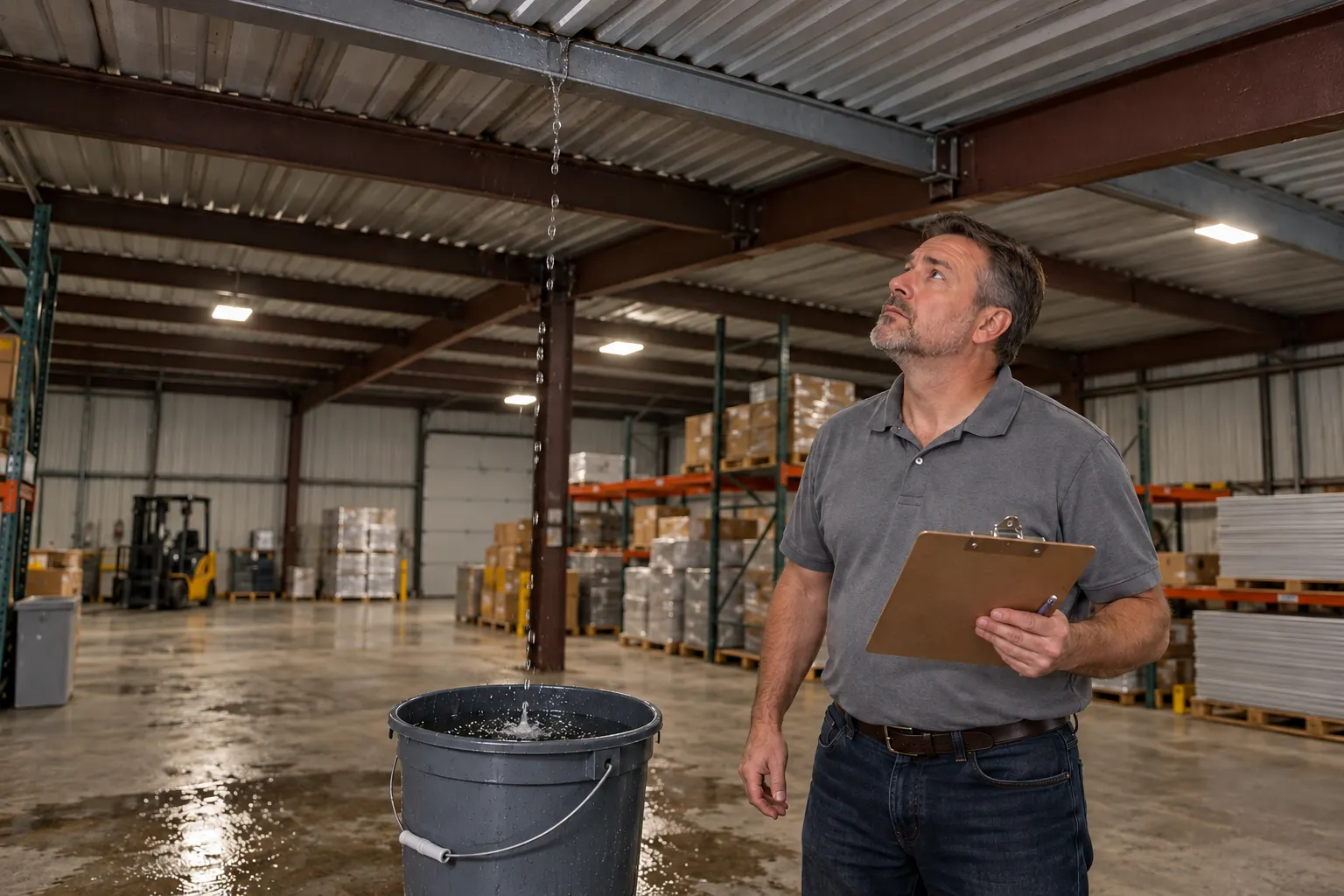
Mixed roofs are common: acrylic on the steep field, silicone in the valleys and behind units.
These are the conditions we see on Lexington roofs that take acrylic well, and the details we fix first.
Corrugated steel on horse barns and indoor arenas loses its paint first on the sunny slope. Acrylic restores a bright surface, and ridge vents and cupolas stay masked so the barn keeps breathing.
Painted panels oxidize into a powder that rubs off on a glove. That chalk blocks adhesion, so it comes off with a pressure wash and a rag test before any acrylic goes on.
Rows of exposed screws follow every purlin on an R-panel roof. Each one gets checked, replaced where it spins, and sealed, because acrylic over a loose screw splits as the steel moves.
Dark panels run far hotter than the air on a sunny afternoon. A white acrylic topcoat reflects much of that sun from the panel surface, which helps buildings with big cooling loads.
Metal panels collect heavy dew after clear Kentucky nights, and it lingers in shade and at laps. Fresh acrylic hit by dew or a pop-up shower has to be redone, so we time each section carefully.
Where two roof planes meet or a unit blocks the flow, water can stand after rain. Acrylic breaks down there, so those strips get silicone while the rest of the roof takes acrylic.
Acrylic comes in more than one build. These are the setups we apply on Lexington metal roofs that drain well.
Rust-inhibiting primer, then a base and top coat of white acrylic, is the standard build on clean, well-drained steel.
Laps, curbs, and pipe boots get polyester fabric set in the base coat before the field is coated, for joints that move.
One roof, two products: acrylic on the slopes that drain and silicone where water stands.
Paths to rooftop units take a urethane layer that handles boots and tool carts better than acrylic alone.
How a well-drained metal roof changes after a water-based acrylic system goes on.
Start with a ballpark range, then we plan around dry days.
Get A Free Ballpark EstimateAcrylic cures by drying, so weather decides the calendar as much as roof size does.
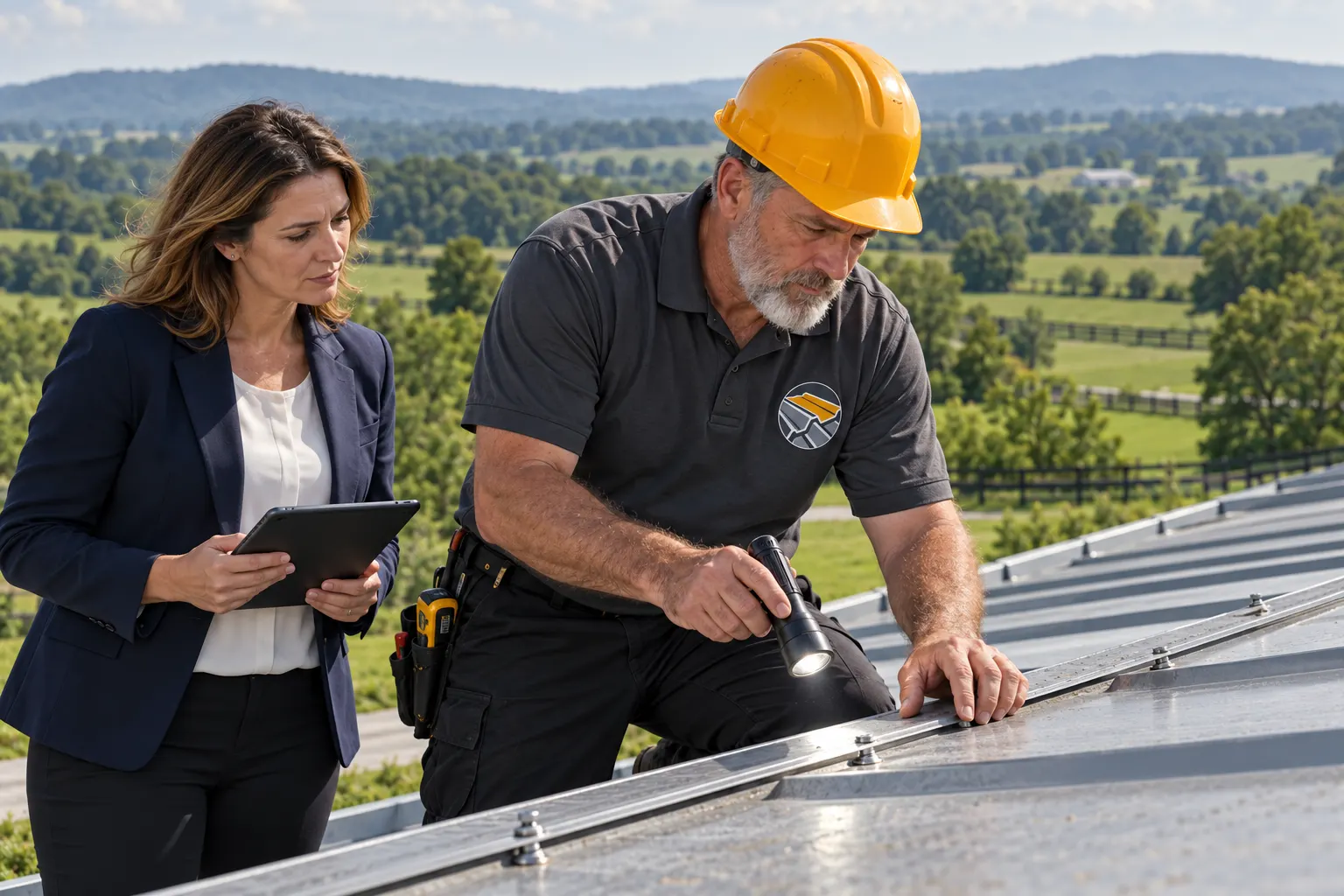
A walk of the full roof checks pitch, drainage after rain, chalking, fastener condition, and vents. Any area that holds water gets flagged for silicone before we price acrylic.
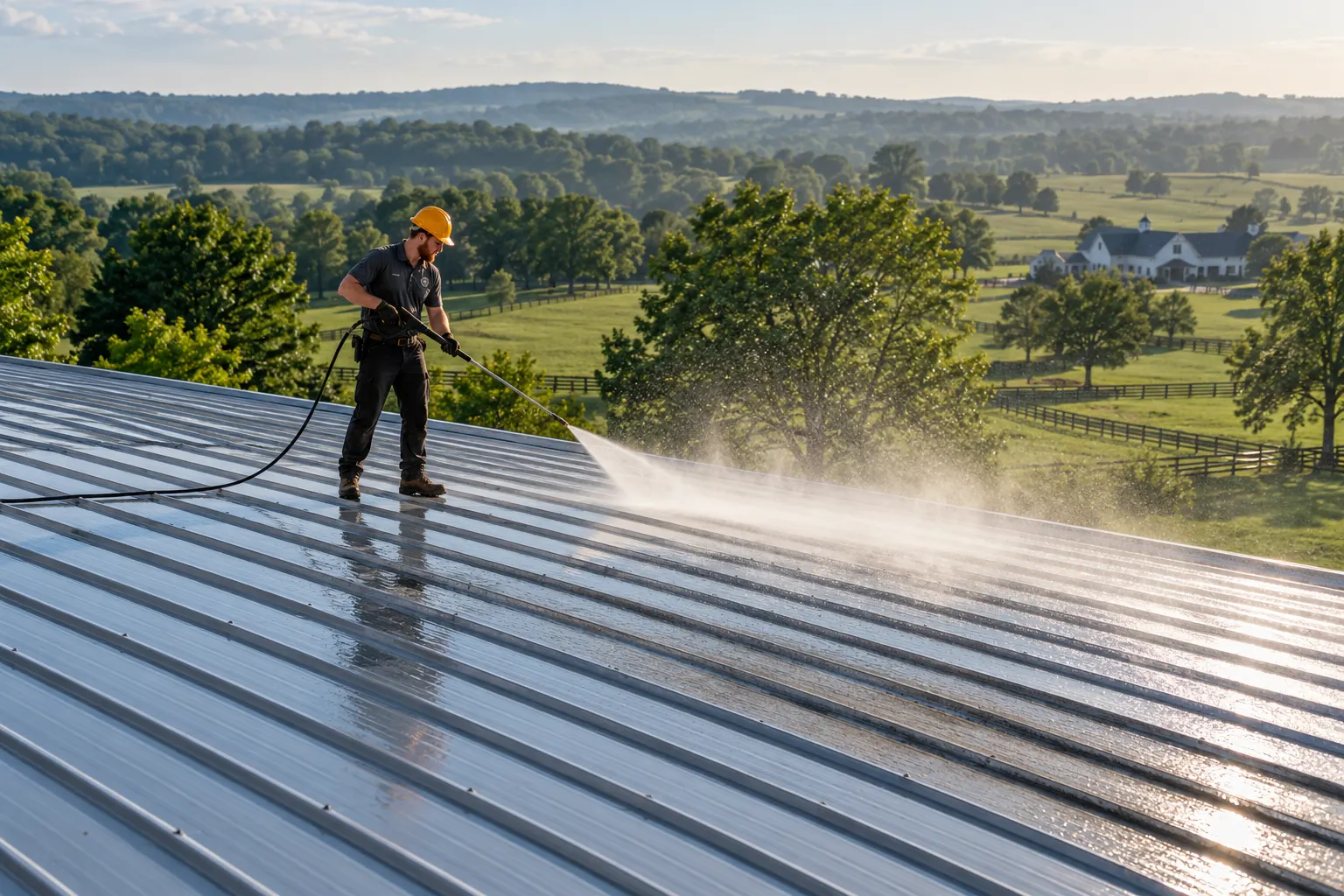
Pressure washing removes oxidized paint, dirt, and mildew. We rag-test washed panels, and a second wash follows wherever chalk still shows on the cloth.
Rusted spots get primer, screws get replaced or capped, and fabric goes into the base coat at laps, curbs, and pipe boots.
Each section is coated only when panels are dry, temperatures are mild, and no rain or heavy dew is due during the cure window.
Base and top coats go on by spray and roller, with masking around vents, cupolas, and skylights that stay open.
A Lexington roof that takes acrylic often needs one of these somewhere else on the building.
Acrylic is one topcoat inside our metal roof coating system, which covers rust treatment, fastener replacement, and lap sealing on every panel.
Metal roof coating in Lexington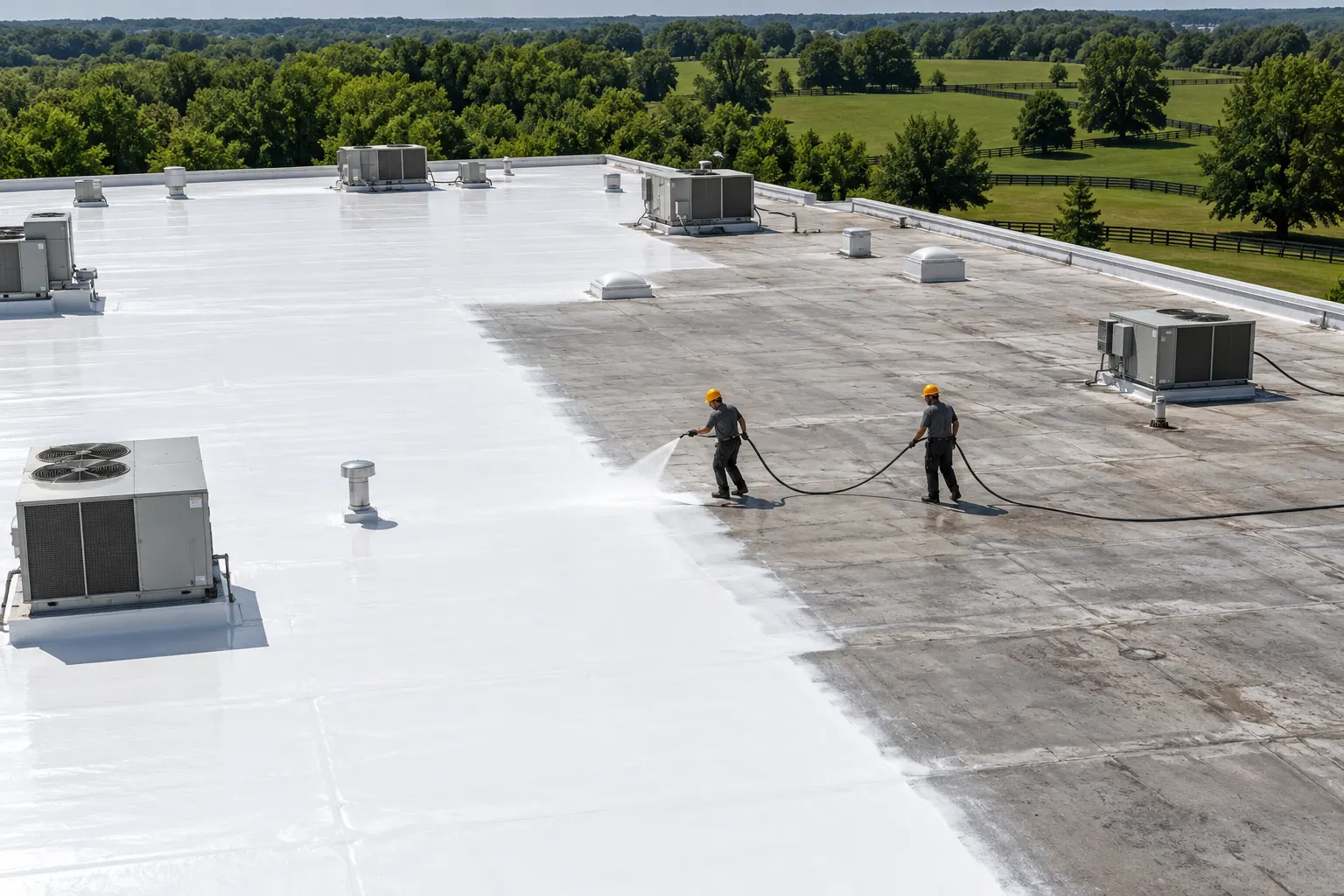
Valleys, low end laps, and areas behind units that hold water get silicone, even when the rest of the roof is acrylic.
Silicone roof coating in Lexington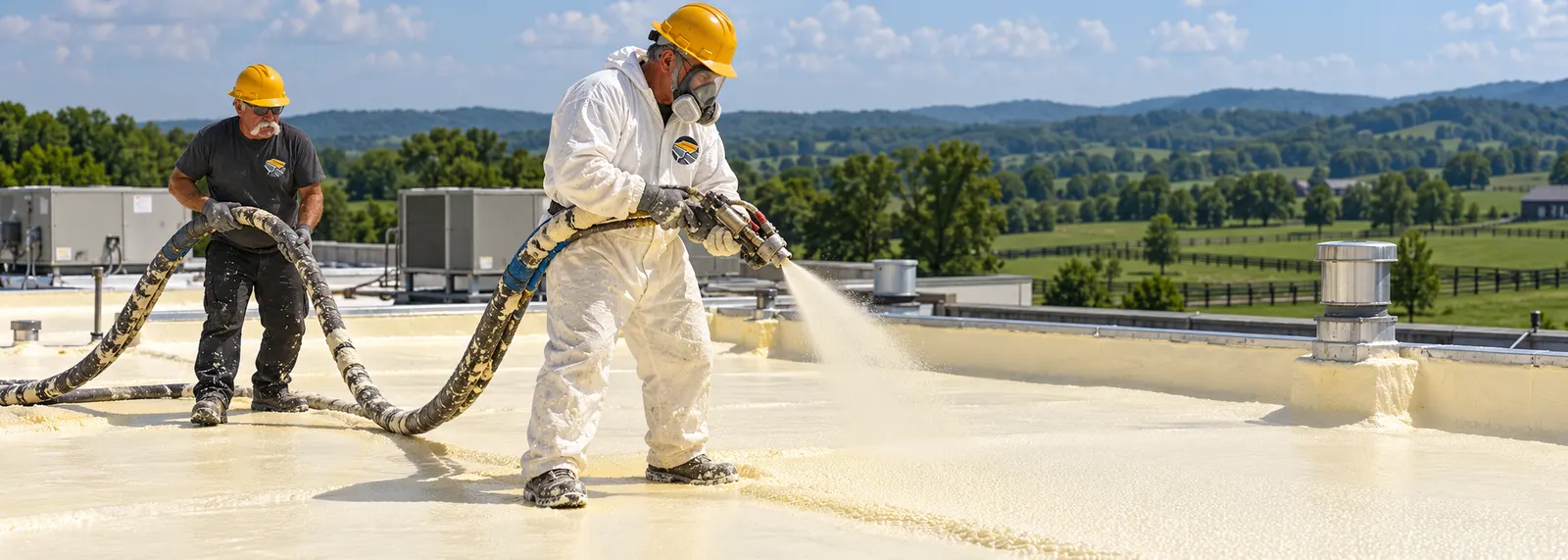
Barns and shops that drip condensation in winter need insulation under the coating, which closed-cell foam provides.
Spray foam roofing in LexingtonWhat Lexington owners ask about acrylic on metal shops, barns, and arenas.
On well-sloped roofs that shed water quickly, such as steeper barn and shop roofs. Acrylic is water-based, low in odor, and cleans up with water, which helps when people keep working inside. Central Kentucky dew and pop-up showers can wash fresh acrylic off, so we watch the forecast in spring and fall.
It cuts summer heat gain, most on buildings with big cooling loads and thin roof insulation. The Department of Energy cool roof guide ties that to solar reflectance and thermal emittance. Expect a small winter heating penalty, compare product ratings in the Cool Roof Rating Council directory, and wash off dirt to keep reflectance up.
Each acrylic maker publishes limits for air and surface temperature, humidity, and dew point spread, and we follow them. In practice that means mild, dry days, panels free of dew, and no rain before the coat cures. Spring and fall windows in central Kentucky fill early.
Yes. Many acrylic roof coatings come in colors besides white, though white reflects the most sun. On a building in a historic district or under landlord rules, the color needs approval before we order product.
No. Standing water softens acrylic and wears it through, so any valley, low end lap, or area behind a unit that holds water gets silicone instead. Those areas are marked during the inspection and priced separately.
A walk each spring and after major storms catches splits at screws, worn spots on walk paths, and clogged gutters. Washing keeps the white surface reflective, and a fresh topcoat goes on when the coating wears thin.
Send the roof size and pitch, or call and we will talk through the weather window.
Leave a name and number and we will call you back.
Or call now: (859) 204-8064