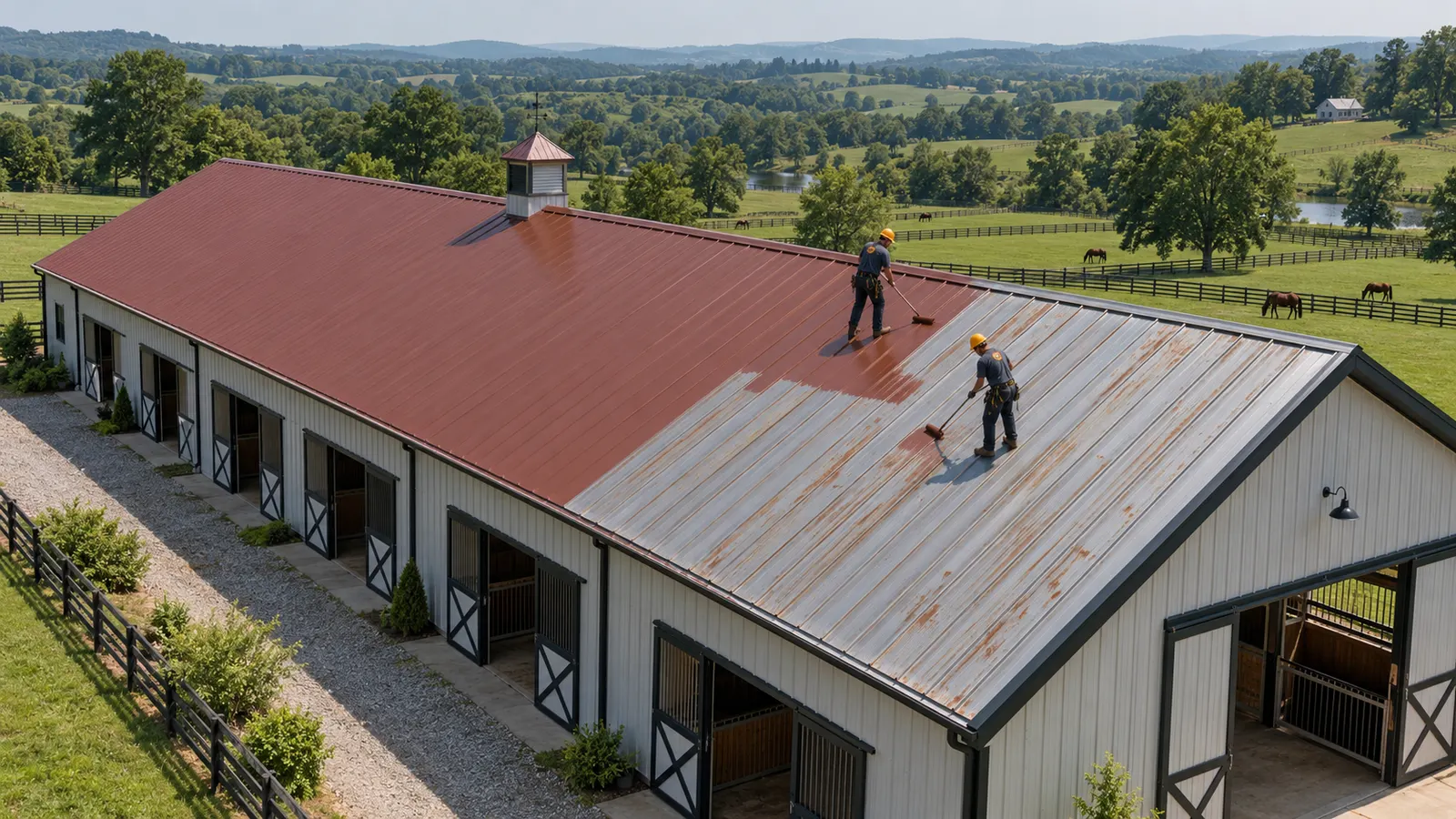
Metal Roof Coating
R-panel, corrugated, and standing seam roofs get rust treatment, sealed screws, fabric at the laps, and a topcoat over the whole field.
Commercial metal roof coating
Our roof coating services in Lexington cover commercial metal roofs plus silicone, acrylic, spray foam, and shingle systems, in Paris and Hamburg too. Pick by how your roof drains.
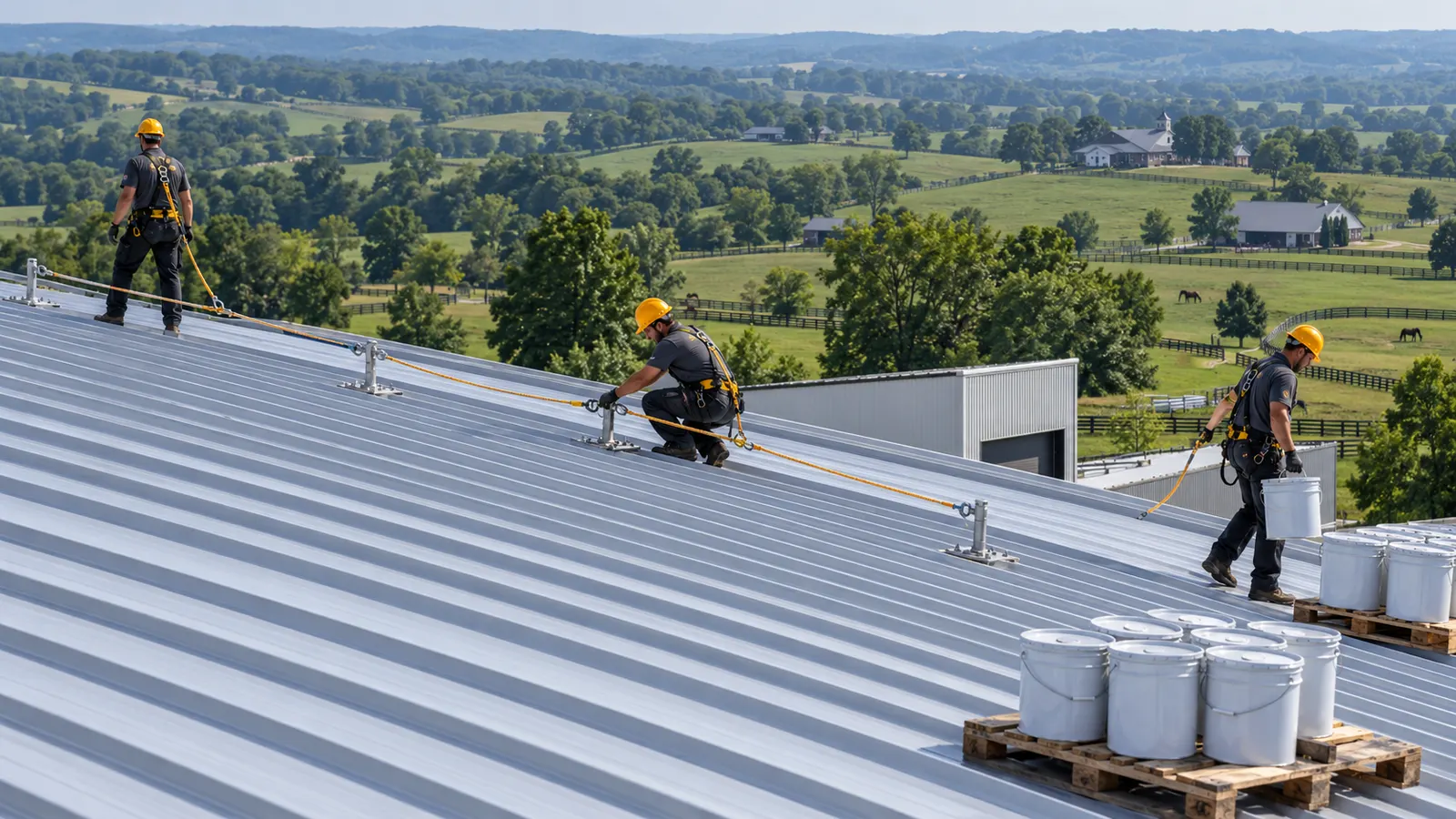
Each system fits a different roof. Start with the one closest to yours.
R-panel, corrugated, and standing seam roofs get rust treatment, sealed screws, fabric at the laps, and a topcoat over the whole field.
Commercial metal roof coating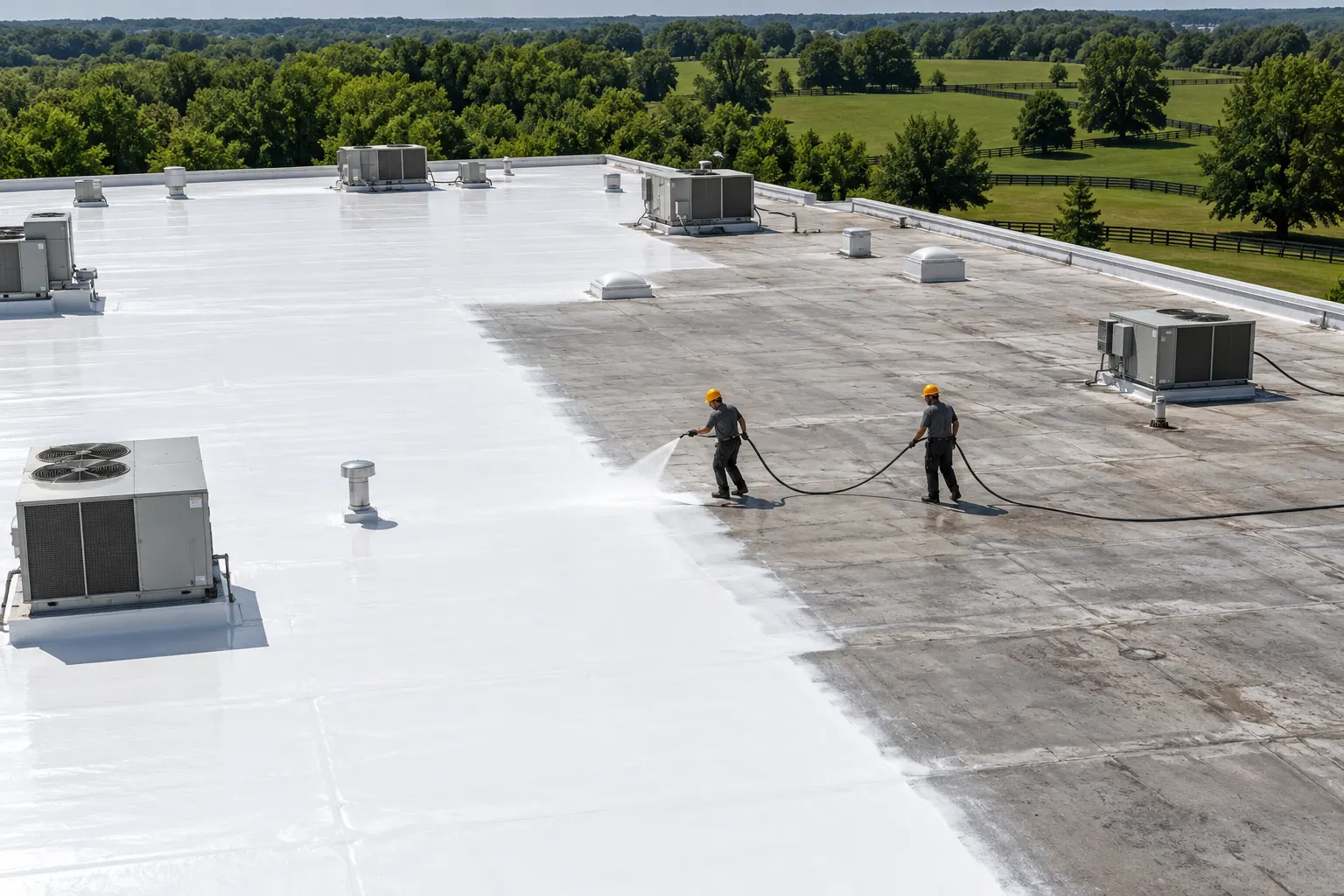
Low-pitch roofs that hold water at laps, gutters, and curbs get silicone, the topcoat built to sit under standing water.
Silicone roof coating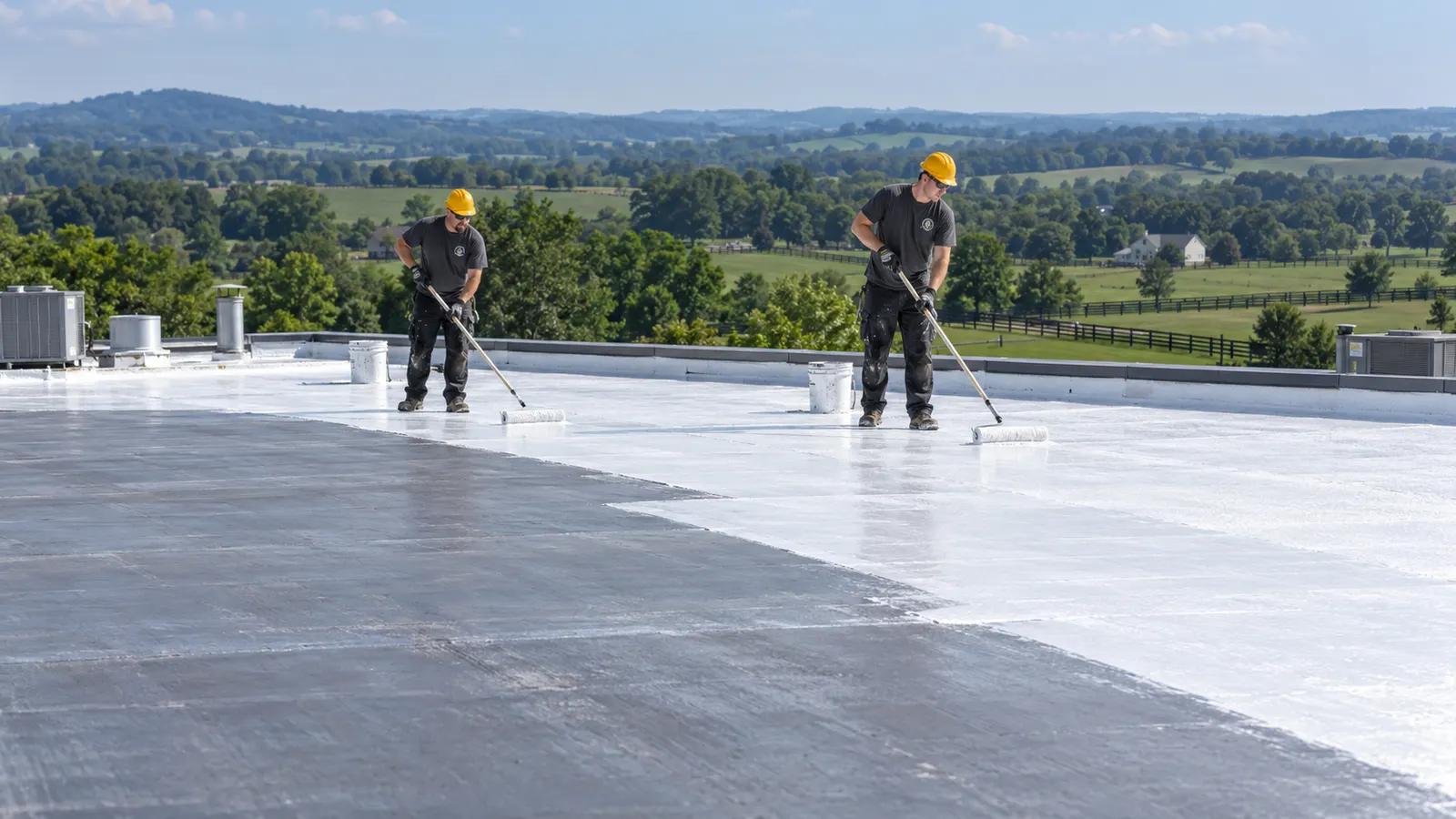
Steeper metal roofs that drain fast take water-based acrylic, with low odor for buildings that stay occupied.
Acrylic roof coating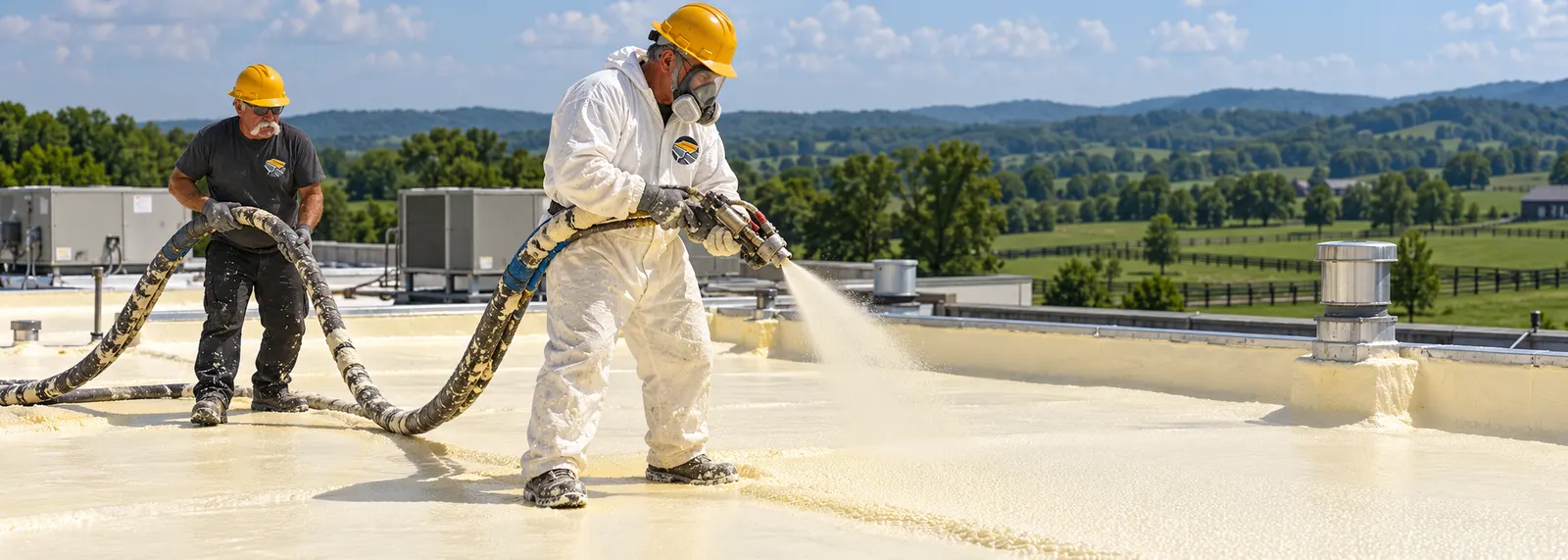
Closed-cell foam over the metal adds insulation and cuts condensation drips, then a topcoat protects it.
Spray foam roofing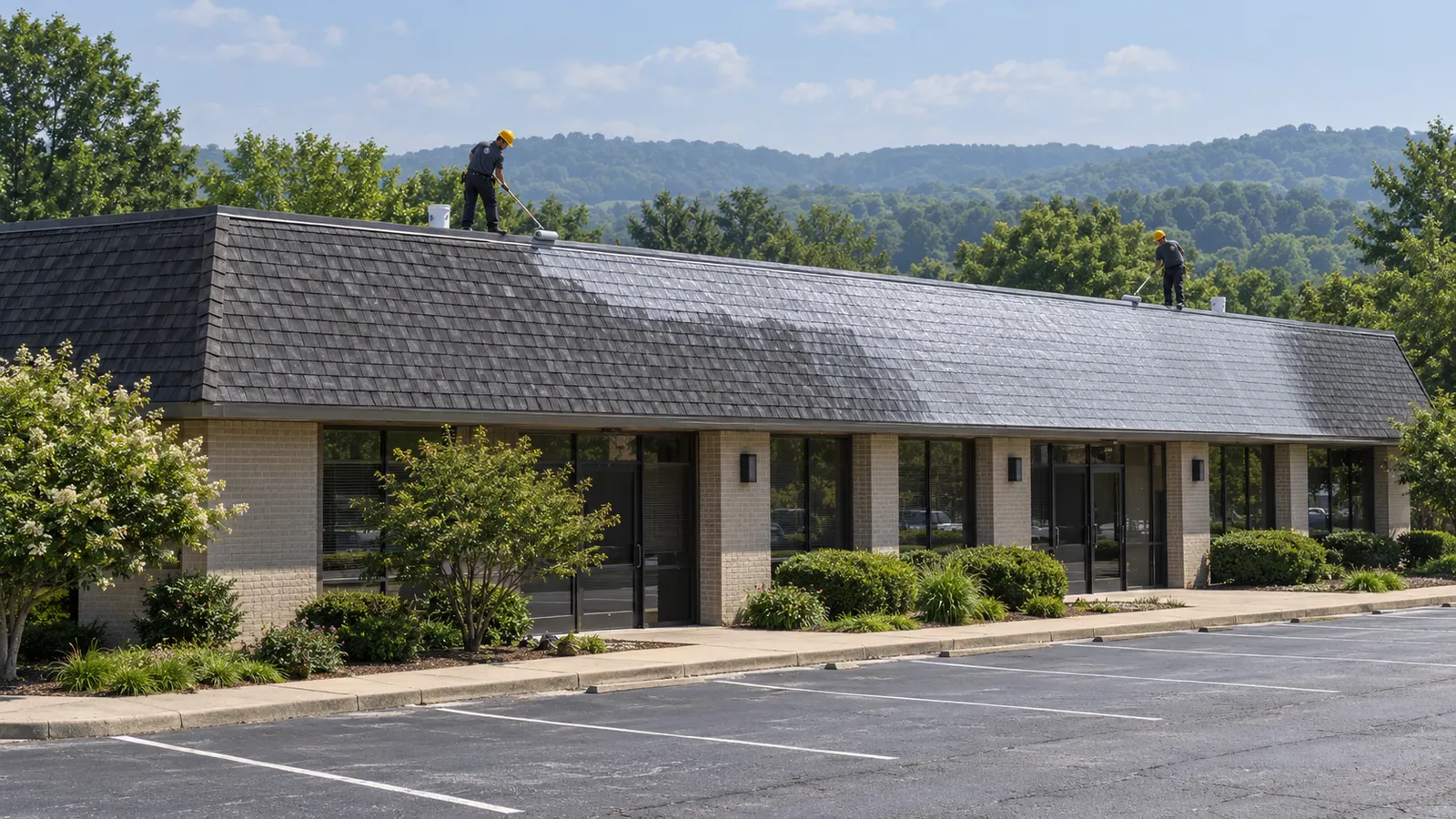
Commercial shingle roofs with flat tabs and intact flashing take a coating when the shingle maker allows it.
Shingle roof coatingDrainage, foot traffic, and the weather during application decide the topcoat on a metal roof.
| Coating | Where It Is Strong | Where It Struggles | Best Fit |
|---|---|---|---|
| Silicone | Standing water and strong sun | Picks up dirt; later coats stay silicone | Low-pitch roofs holding water at end laps or gutters |
| Acrylic | Bright white, water-based, low odor | Wears out under ponding; needs warm, dry days | Steeper metal that sheds rain fast |
| Urethane | Foot traffic and impact | Solvent odor; used mostly as a base or on paths | Walk paths to rooftop units |
| Foam plus coating | Insulation and one layer over every screw | Raises the edge; gutters and trim need new details | Heated shops and barns that drip |
Most metal roofs pair one of these with a rust-inhibiting primer, and an adhesion test on the actual panels confirms the bond.
Whichever coating you choose, the work follows the same order.
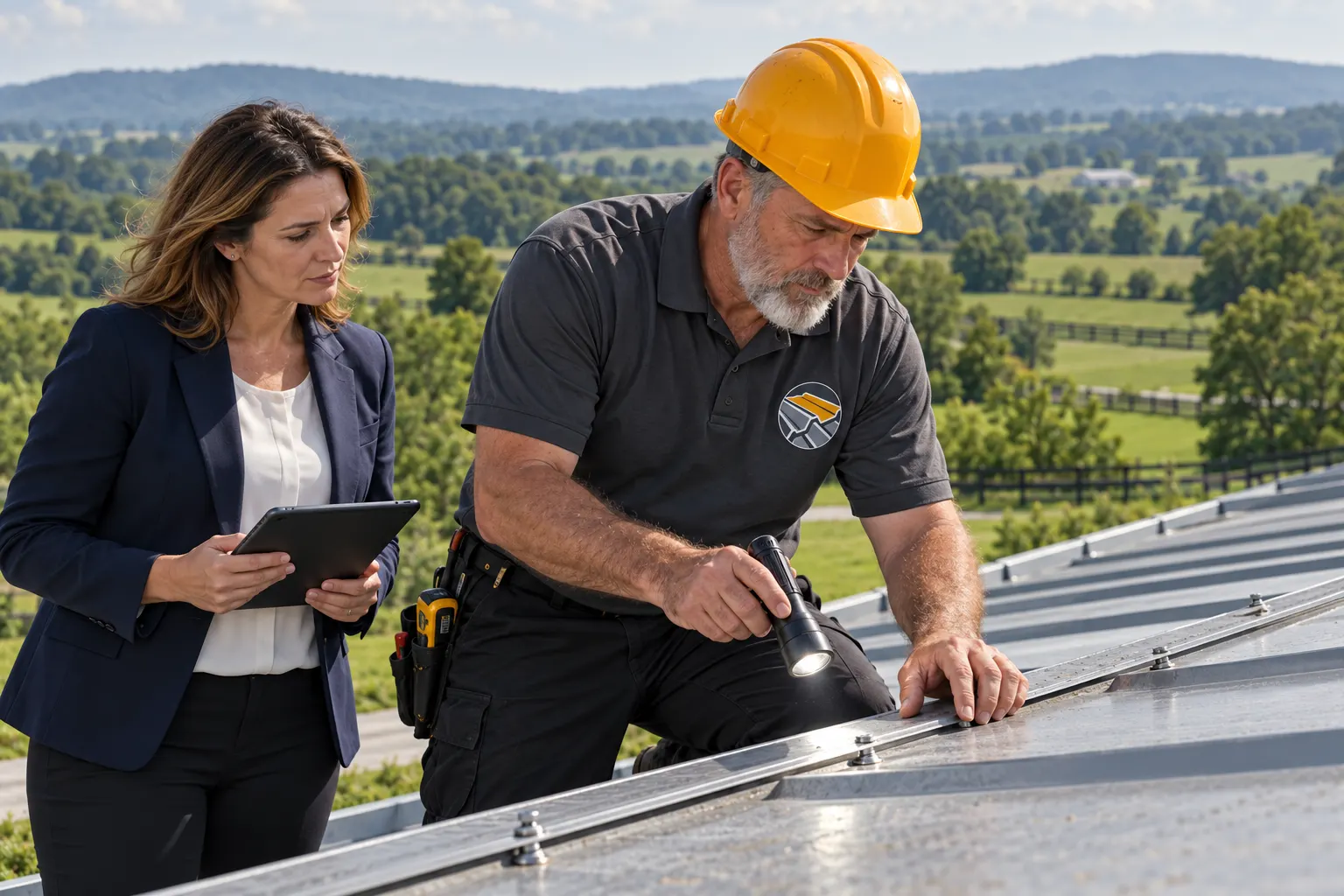
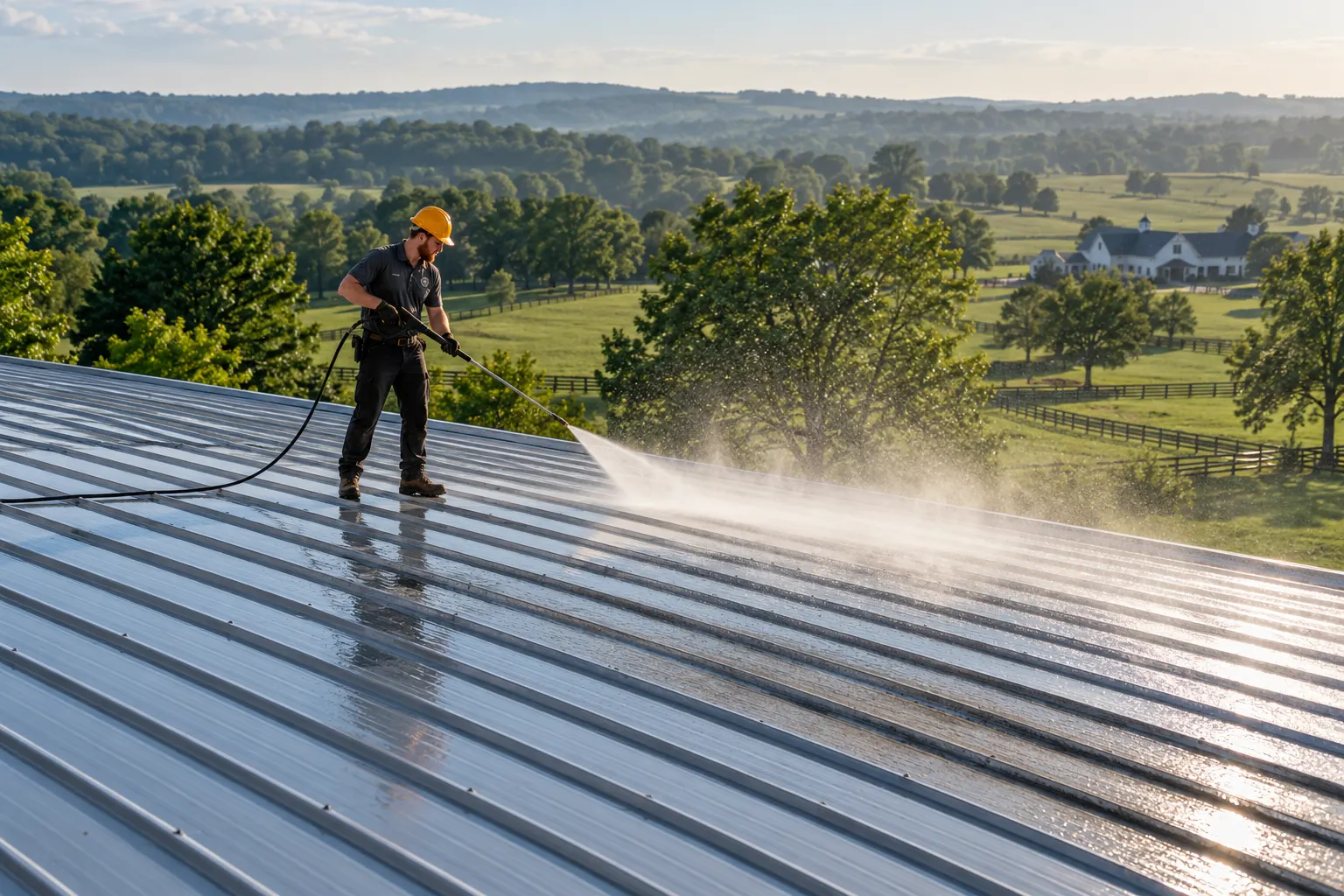
Every job starts on the roof with photos of fasteners, laps, skylights, flashing, and gutters, plus a look from inside wherever stains show.
Pitch, standing water, insulation, and foot traffic point to the topcoat, and many buildings end up with two systems on different sections.
Rusted sheets, loose screws, open laps, worn flashing, and clogged gutters are fixed first, because a coating protects only what is already sealed.
Panels and shingles are cleaned for the chosen product, rust is primed, and fabric goes into the joints that move.
Sections are coated around open businesses, rooftop units, and the weather window, one planned area at a time.
What owners ask when they compare coating systems for a commercial roof.
Roofs with solid panels, tight attachment to the purlins, and surface rust only. Around Lexington that covers R-panel on warehouses, shops, and self-storage, corrugated steel on barns, arenas, and sheds, and standing seam on offices and retail. Crushed, rusted-through, or loose sheets get swapped first, then the whole roof is coated.
Standing seam prep centers on seams, clips, and trim, with only a few exposed screws. R-panel prep means thousands of screws to tighten, replace, and seal, plus fabric at every side and end lap. Standing seam panels slide on their clips, so the seam coating has to stay flexible, and any panel maker terms come first.
Silicone for low pitch and standing water, acrylic for steeper roofs that shed water fast, and urethane for walk paths and traffic zones. Most metal roofs pair one of them with a rust-inhibiting primer, and an adhesion test on your panels confirms the bond.
Prep sets the schedule more than spraying. Washing and drying, fastener and lap work, skylight and closure swaps, and cure time between coats take most of the calendar. A small standing seam office moves faster than a big R-panel warehouse with rusted end laps, and rain or heavy dew adds days.
Improvements to roofs on existing nonresidential buildings can count as qualified real property under Section 179, per IRS Publication 946. For tax years beginning in 2026, the limit is $2,560,000, reduced once qualifying property passes $4,090,000. Whether your coating counts as an improvement or a repair is a question for your CPA.
Leak locations, the roof's age, and notes on past repairs help most. Add photos of stains or rusty purlins from inside, dates of earlier coatings or panel swaps, ladder or lift access, panel paperwork, and notes on rooftop units, vents, and solar or antenna mounts.
Send the roof size and type, or call and we will help you narrow it down.
Leave a name and number and we will call you back.
Or call now: (859) 204-8064