R-Panel And Standing Seam

Lexington Commercial Metal Roof Coating

Our commercial metal roof coating work in Lexington starts with rust primer and sealed screws and laps, then a topcoat over every panel so the roof sheds water as one surface.

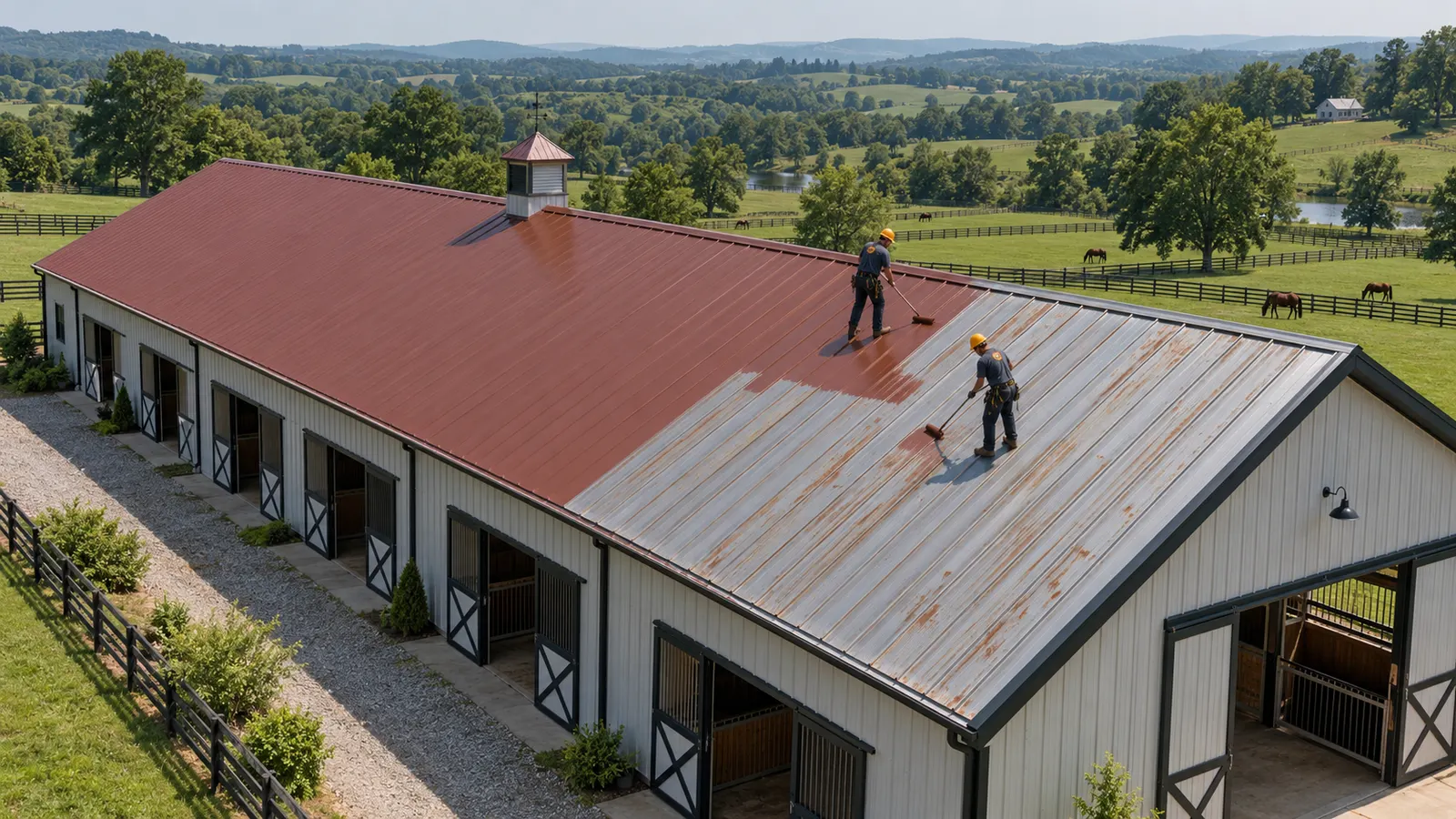
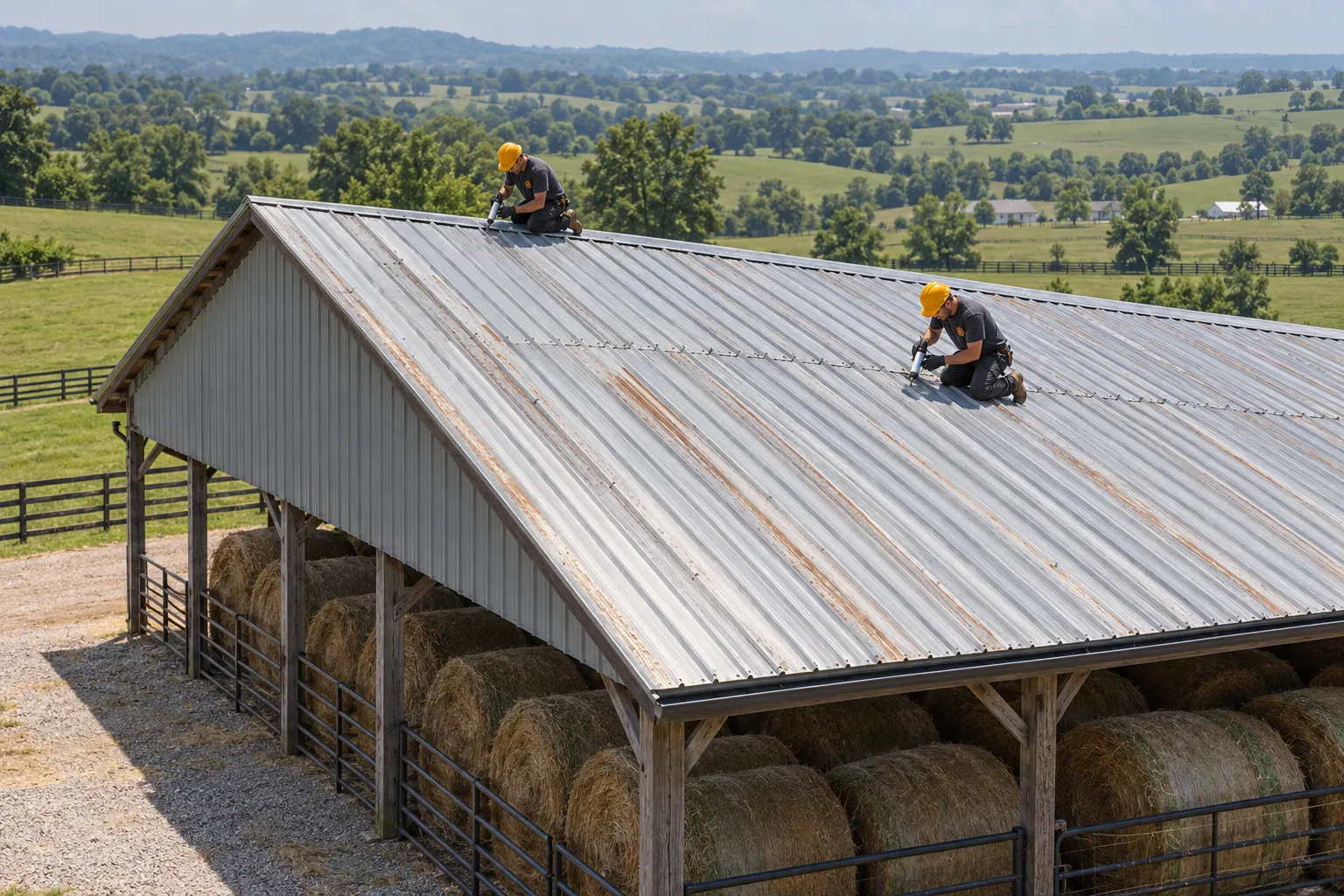
Roofer sealing metal roof seams and end laps with reinforcing fabric
  • Red rust primed, white rust cleaned
  • Oversized screws where heads spin
  • End laps banded with fabric
  • Skylights replaced, coated, or screened

Is This Roof A Fit?

Metal roofs that qualify share three things: solid panels, tight attachment, and rust that stays on the surface. Compare yours with the two cards.

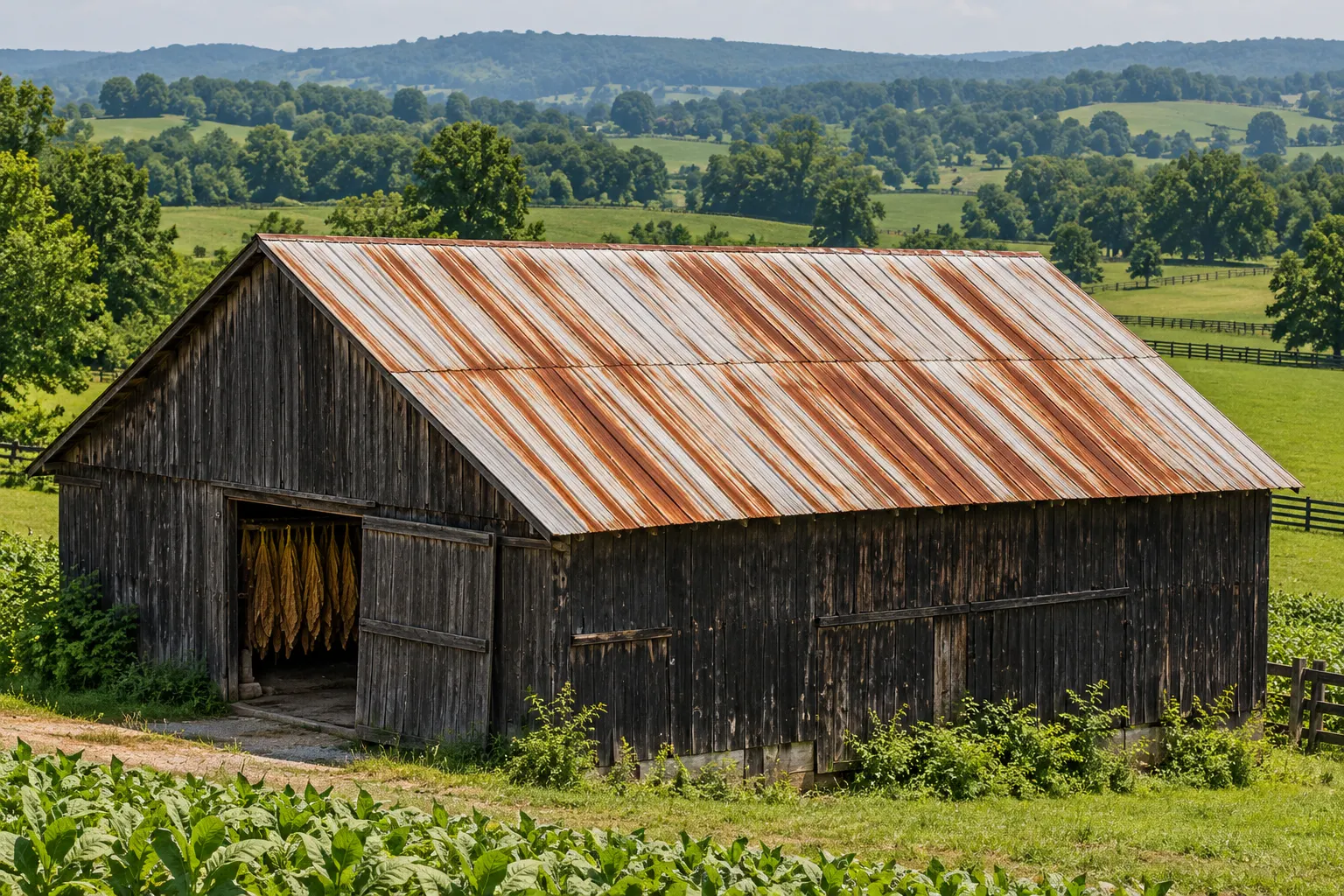
Aerial view of a large metal roof on a commercial building near Lexington

Coat It Now

Panels
Solid underfoot, no flex between purlins
Fasteners
Loose in spots, washers hardened
Rust
Light surface rust and chalky zinc
Paint
Faded or worn through to primer
Our call
Clean, prime, seal laps, topcoat
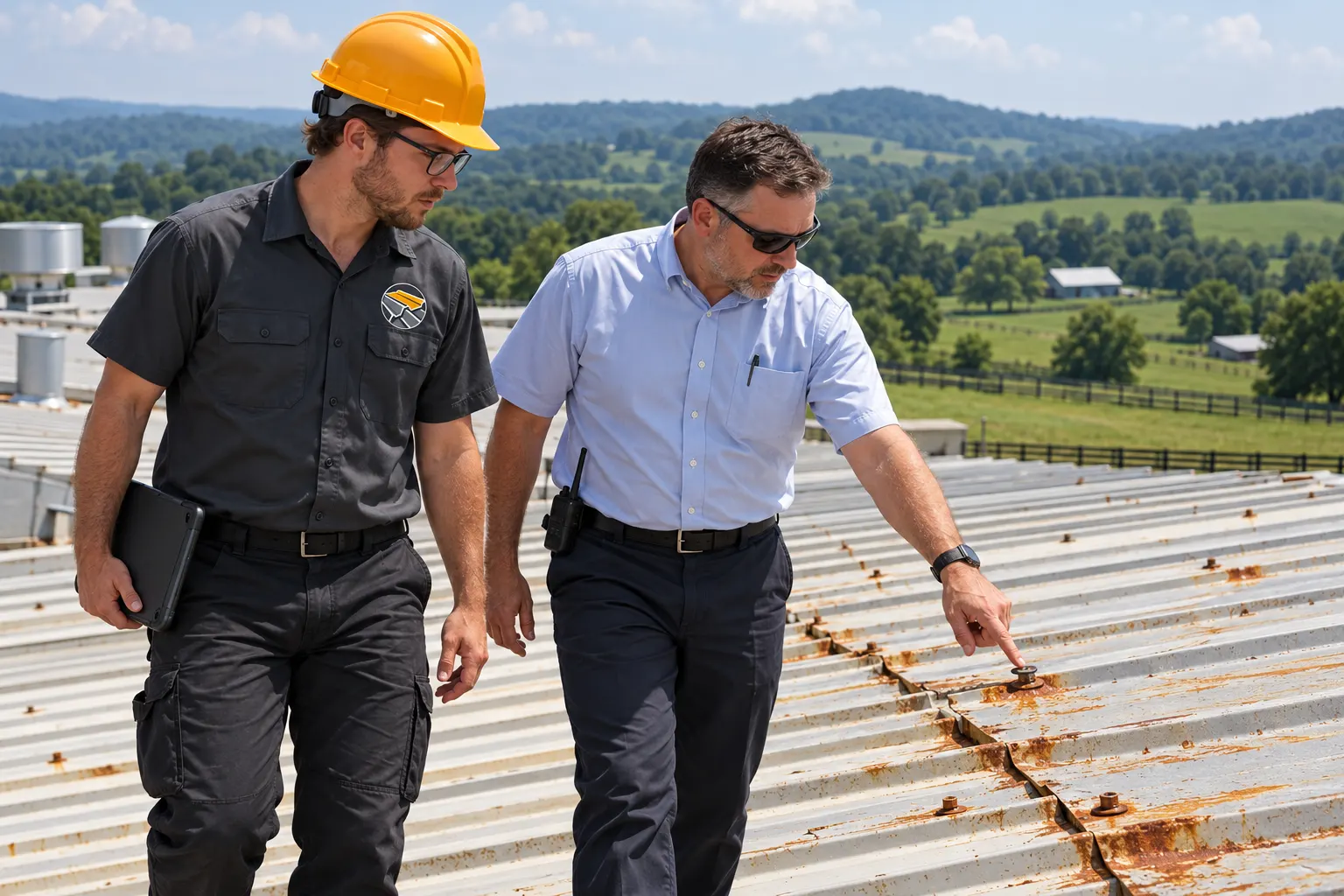
Rusted fasteners and worn paint on an older metal roof panel

Fix Steel First

Panels
Flexing, split at seams, or crushed
Fasteners
Stripped holes that no longer hold
Rust
Holes that let daylight through
Paint
Peeling in sheets with scale beneath
Our call
Swap bad sheets, then coat the rest

Replacing a few sheets and coating the whole roof is a common middle path. A full tear-off is for widespread rust-through or weak framing.

Where Metal Roofs Fail First

These six spots account for most of the leaks we trace on Lexington R-panel and standing seam roofs.

Washers That Have Hardened

Sunlight bakes the rubber washer under each screw head until it cracks. The screw still looks tight, yet water runs down the shank. A large R-panel roof holds thousands of screws, which is why fastener work is a big share of the labor.

Low-Pitch End Laps

Across the slope, an upper sheet overlaps a lower one, and on shallow roofs rain backs up under that lap. Grit and rust collect inside, and the drip shows up several feet downslope from where the water gets in.

Rust Rings Around Screws

Orange halos around fastener heads mean water has sat at the hole for a while. Light rings clean up with a wire brush and primer. Scale that flakes away needs a look from inside the building too.

Panels That Move With Temperature

NWS Louisville recorded minus 7 degrees at Lexington on January 21, 2024, and 64 degrees four days later. Swings like that stretch and shrink long panel runs, so the coating at seams and screws has to stay flexible.

Standing Seam Runs That Opened

Raised seams can unlatch along part of a run, and clips let panels slide as temperatures change. We check each run, reseat what lifted, and keep the coating at the seams elastic enough to follow that movement.

Brittle Skylight Sheets

Older translucent panels yellow and crack at their laps. They also become a fall hazard during roof work, so panels that stay in service get screens and careful masking against overspray.

Commercial Roof Coating Options for Lexington

Every metal roof gets a rust-inhibiting primer matched to the panel. The topcoat over it is chosen by drainage, foot traffic, and the weather window.

Acrylic Over Primer

Bright white and water-based, acrylic fits metal roofs with enough pitch to shed rain quickly. It needs warm, dry days to cure, and it breaks down where water stands at end laps.

Silicone Over Primer

Low-pitch panels that hold water at laps and gutters take silicone, which resists standing water and sun. Plan on silicone again for later recoats, since most other coatings bond poorly to it.

Urethane On Walk Paths

Tough under boots and dropped tools, urethane goes on the paths to rooftop units and service areas, often as a base under another topcoat.

Foam Plus Coating

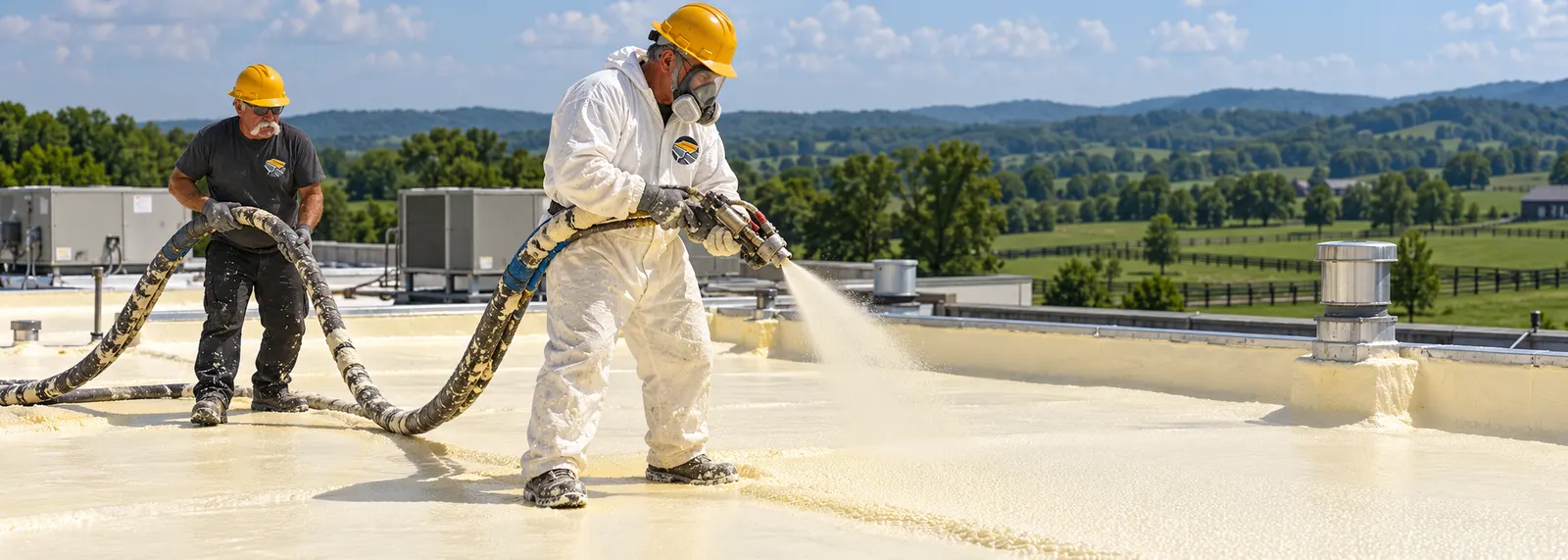
Closed-cell foam levels the ribs, buries every fastener, and adds insulation before a protective topcoat. It raises the roof edge, so gutters and eave trim need new details.

Benefits of Coating Your Roof

Four changes owners notice after a metal roof is coated, set against the problems they had before.

Before Coating

  • Fastener rowsleaking at cracked washers after every hard rain
  • End lapsrusting inside the joint where water backs up
  • Panel facechalky paint and bare spots at the eaves
  • Inside the buildingstains on insulation under the screw lines

After Coating

  • Sealed fastenerseach head capped under the coating, so screw lines stop leaking
  • Reinforced lapsfabric in the base coat bridges joints that open as panels move
  • Protected steelprimer and topcoat slow rust by keeping water and air off the metal
  • Cooler panel surfacea light topcoat reflects sun and lowers the heat the roof absorbs

Rusty Screw Lines Or A Planned Recoat?

Water Inside Now?

Call and tell us which fastener row or lap is dripping.

Call Us

Planning Ahead?

Start with a ballpark range for coating your metal roof.

Get A Free Ballpark Estimate

How We Coat A Metal Roof In Lexington

Fastener and lap work takes most of the calendar. Spraying goes fast once prep is done.

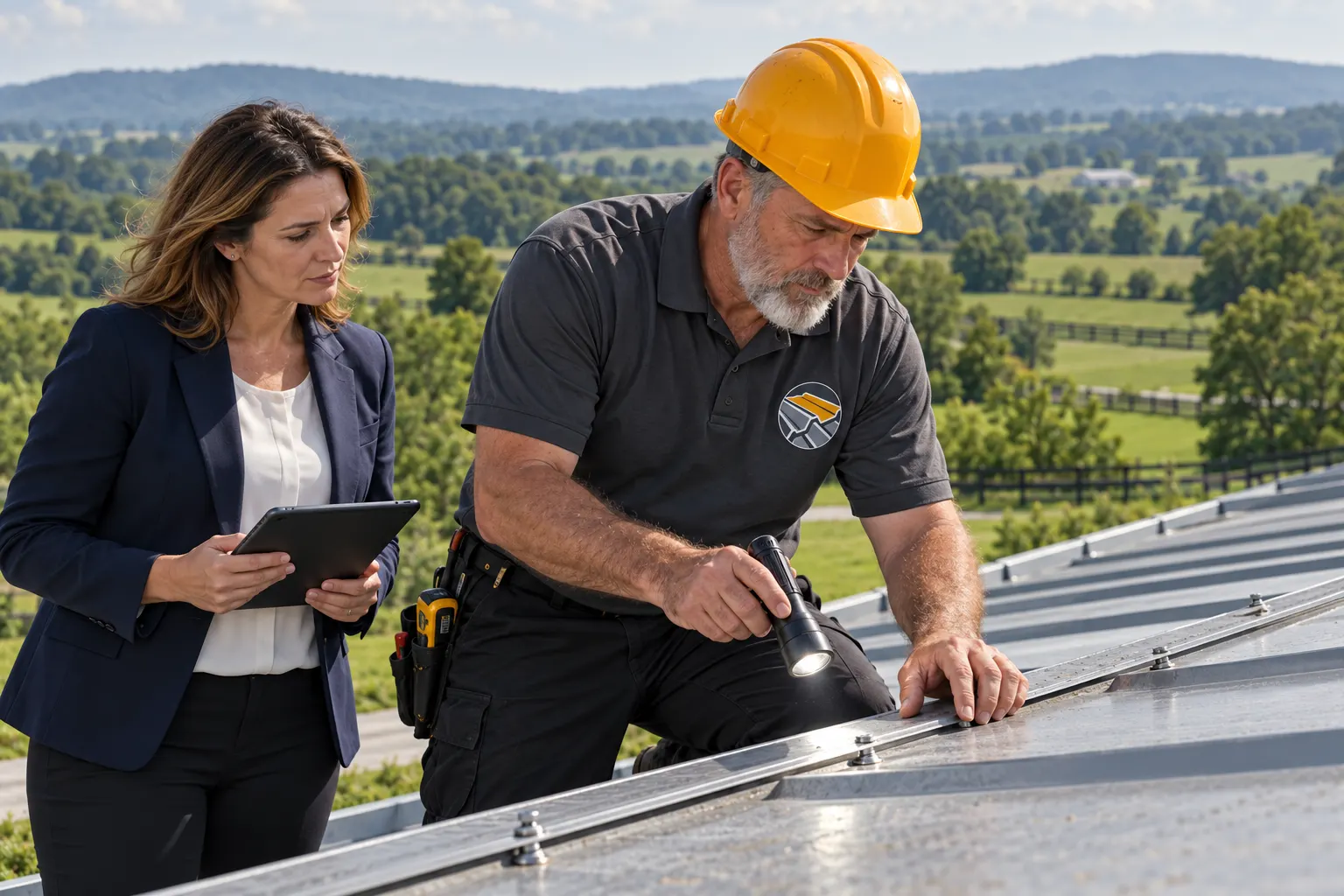
Roofer inspecting fasteners and panel laps on a metal roofRoofer in a logo uniform walking a metal roof with a building manager
  1. Inspect Your Roof

    Each panel run gets walked and photographed: screw heads, washers, side and end laps, skylights, ridge caps, and gutters. We check for flex between purlins and look up from inside where insulation is stained.

  2. Clean To Firm Metal

    Chalk, dirt, mildew, and white rust come off with a pressure wash and a cleaner matched to the coating. A rag wipe on a washed panel shows whether chalk residue is still there.

  3. Prime The Rust

    Red rust at fastener heads, laps, and eaves gets wire-brushed or ground to tight rust, then sealed with a rust-inhibiting primer once the panels are completely dry.

  4. Seal Screws And Laps

    Backed-out screws are swapped for oversized fasteners, every head gets sealant or a coating cap, and laps get fabric or butyl-backed tape set into the base coat.

  5. Topcoat The Roof

    Base and top coats cover the full field, with extra thickness at curbs, pipe boots, and ridge caps. Skylights that stay are masked so overspray never dulls them.

Related Coatings For Metal Buildings

Some metal roofs need a different topcoat or a foam layer. These three come up most on Lexington jobs.

Aerial view of a low-slope roof section being coated with silicone

Silicone Roof Coating

Pick silicone when end laps or box gutters still hold water a day after rain, since acrylic wears out where water stands.

Silicone roof coating in Lexington
Crew applying white acrylic coating to a sloped metal roof

Acrylic Roof Coating

Steeper barn and shop roofs that shed water fast are where water-based acrylic earns its place, with low odor for people working inside.

Acrylic roof coating in Lexington
Roofer spraying foam over a metal roof on a commercial building

Spray Foam Roofing

Heated buildings that drip condensation under the panels gain insulation and one continuous layer when foam goes over the metal first.

Spray foam roofing in Lexington

Metal Roof Coating Answers

Questions owners ask us about R-panel and standing seam roofs in Lexington.

What Does Coating Do For A Metal Roof?

It adds a continuous rubbery skin over the panels, laps, and screw heads. That skin seals the joints where leaks start, keeps water and oxygen off rusting steel, and, in white or a light color, reflects sun to cool the panel surface. The steel still carries the load; the coating protects its face.

Coat, Restore, Re-Panel, Or Replace?

Rust depth and panel strength decide. Light rust and a few leaking screws call for a coating. Many backed-out screws, leaking end laps, and cracked skylights call for a restoration with fastener and lap work. Isolated rust-through means re-paneling those sheets; widespread rust-through or weak purlins means replacement.

Why Treat White Rust And Red Rust Differently?

White rust is the zinc layer breaking down, usually where water sits at laps and low ribs, and it gets cleaned off so primer bonds. Red rust is the steel itself corroding; it gets brushed or ground back to tight rust and sealed with a rust-inhibiting primer.

Why Do The Screws On My Roof Keep Backing Out?

Daily expansion and contraction of the panels works screws loose over the years, and sun hardens the rubber washers until they crack. Look for heads standing above the panel, rust rings, and stained insulation under fastener rows. Oversized screws bite fresh metal and get sealed before coating.

What Happens To Skylights And Ridge Caps?

Both get repaired before coating so the roof drains as one surface. Worn skylight panels are replaced, coated over to close off daylight, or screened if they stay. Ridge caps get new closures, sealed fasteners, and reinforced laps, because wind-driven rain often enters there.

Why Does A Metal Roof Need A Flexible Coating?

Kentucky temperature swings keep long panel runs moving, and stiff paint cracks at every screw and seam as they do. An elastomeric coating stretches with the steel. A walk each spring catches any split at screws or ridge caps while it is still small.
Ready To Seal Your Metal Roof?

Send the roof size and leak spots, or call to talk through rust, screws, and laps.

Call Us (859) 204-8064