Shallow End Laps
On a low-pitch run, water backs under the upper sheet and sits in the joint. These laps get cleaned, rust-treated, and banded wider than the rest of the roof before silicone covers them.
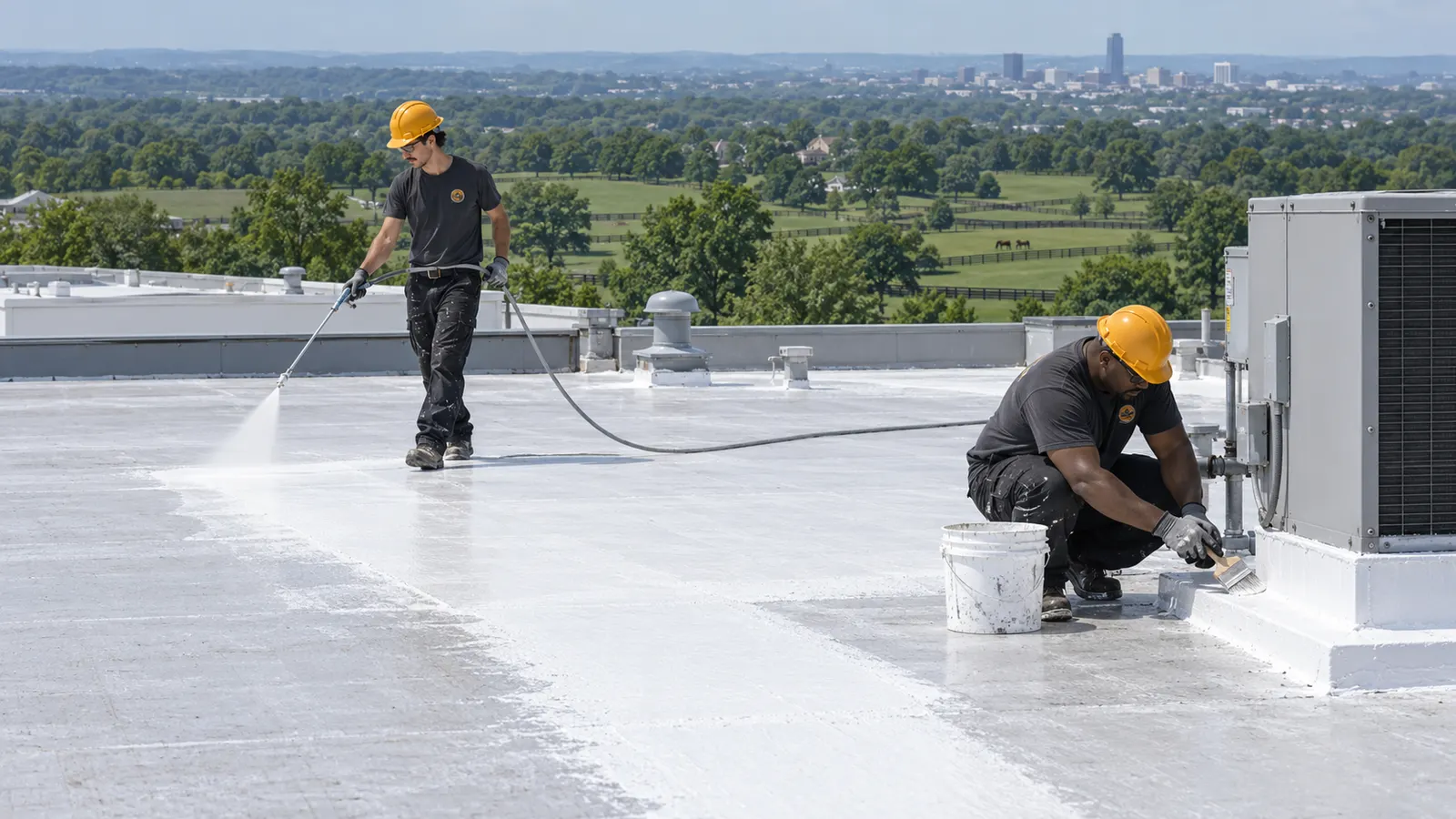
We apply silicone roof coating in Lexington to low-pitch metal and flat commercial sections where water sits at end laps, box gutters, and behind rooftop curbs.
Silicone earns its place where water stays after rain. Compare your roof with the two cards before choosing it.
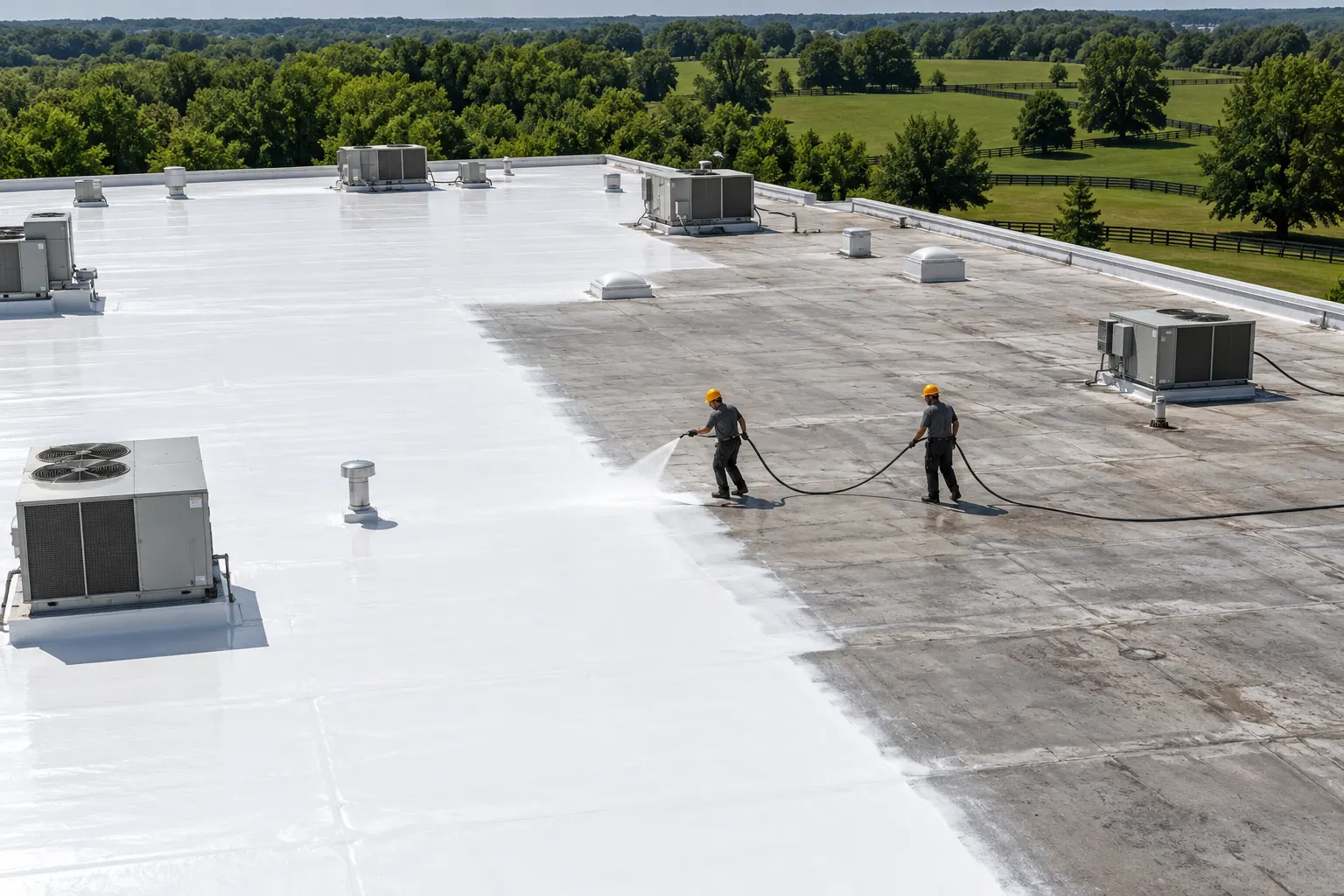
Silicone is recoated with silicone later, so the first choice carries forward for every recoat after it.
Silicone work starts by finding every place the roof holds water and every detail that water attacks.
On a low-pitch run, water backs under the upper sheet and sits in the joint. These laps get cleaned, rust-treated, and banded wider than the rest of the roof before silicone covers them.
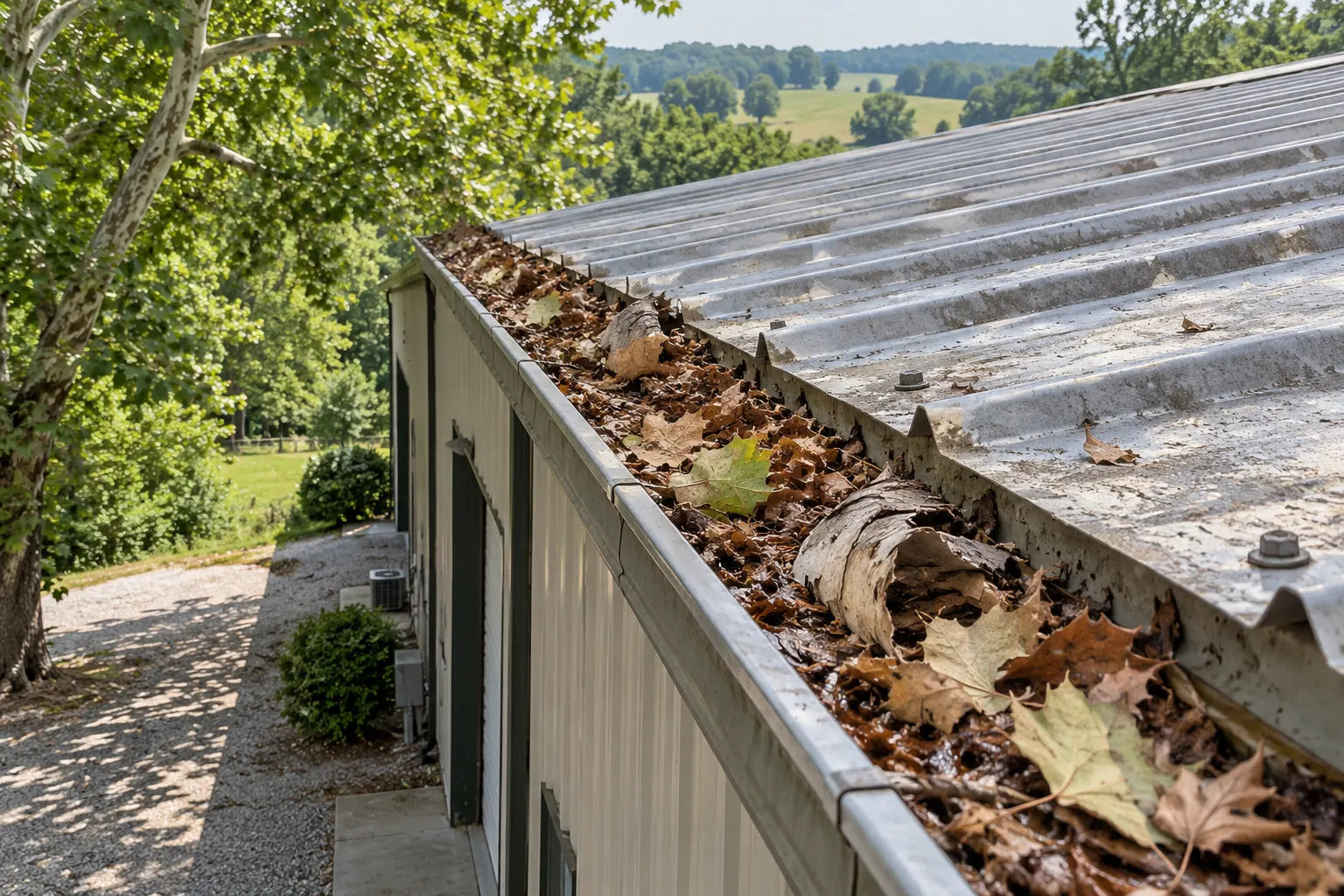
Built-in gutters fill with leaves and grit, then hold water against the steel for weeks. We clear them, flush the downspouts, seal seams and end caps, and coat the gutter interior.
Rooftop units and their curbs block the flow on shallow roofs, leaving a puddle on the upslope side. Those spots get extra silicone thickness and flashing repairs around the curb.
Dents in steel are often cosmetic, but coating that cracks at a dent lets water reach bare metal. After a storm we check ridge caps, skylights, and fasteners near dents, and photograph damage with the date.
Panels that sag between purlins hold a shallow pool near the eave. We check the framing from inside first, since coating over a sagging bay hides a structural problem.
Wet silicone is slippery, which matters on roofs that service techs cross every month. Granule-surfaced walk paths go down between the hatch and each rooftop unit.
Silicone is one of several topcoats we apply over primed metal and older roof surfaces in Lexington. Here is how it compares on low-pitch work.
Single-component silicone goes on thick over primed metal and fabric-banded laps, holding up under the water that pools at low end laps.
On steeper sections of the same building, acrylic costs less to recoat and stays brighter, so mixed roofs often get both.
Service paths and areas around rooftop units take a tough urethane base under the silicone topcoat.
Where the building needs insulation or the panels drip condensation, spray foam goes down first and silicone covers it.
What changes on a low-pitch roof once silicone covers the laps, gutters, and curbs.
Silicone goes on last. Most of the work is drying, cleaning, and reinforcing the places water sits.
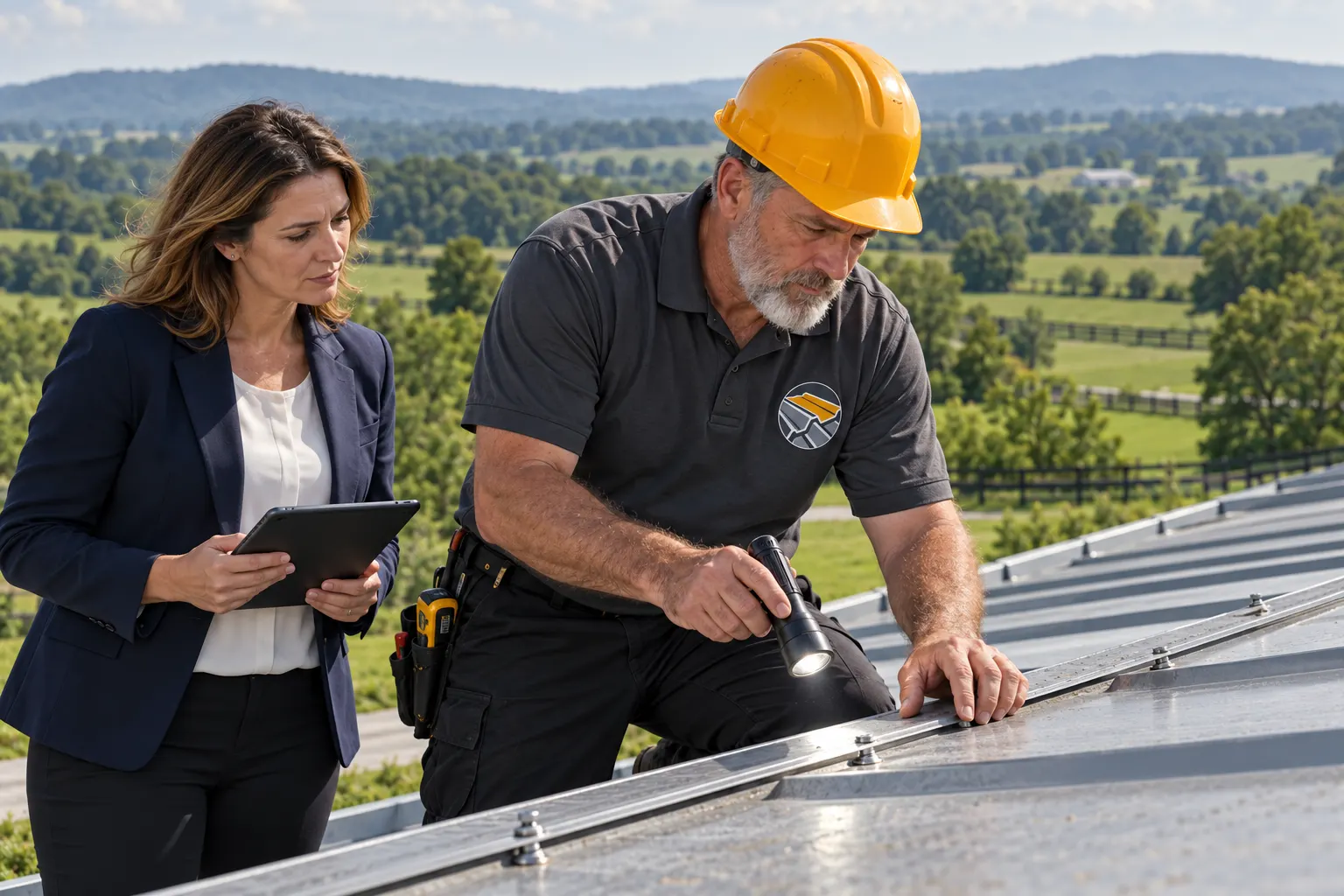
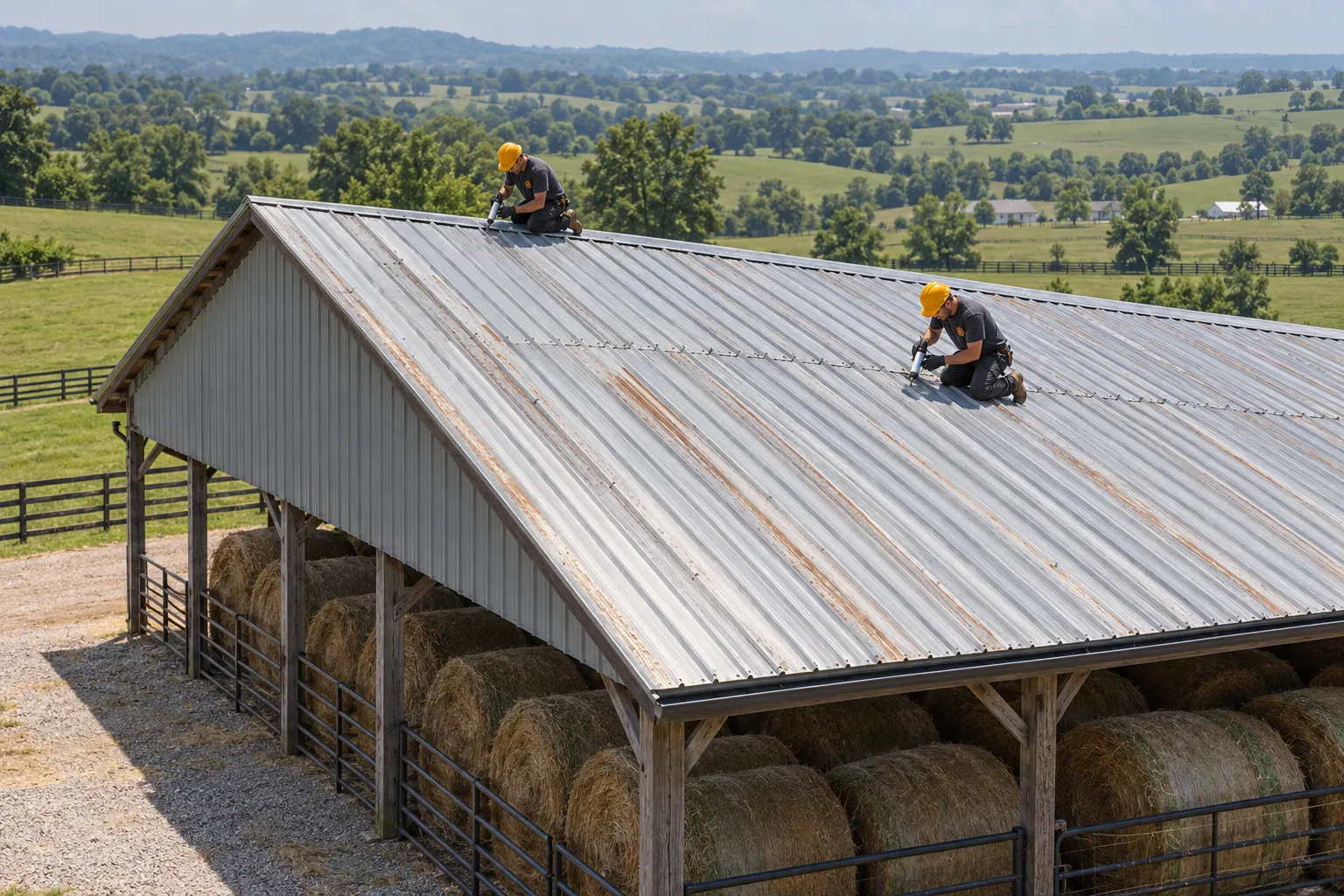
We map where water collects after rain, then walk every lap, gutter, and curb. Moisture readings and photos show which bays need framing or panel work before any silicone goes down.
Panels are washed with a cleaner matched to the silicone, and low spots get time to dry completely. Silicone over trapped moisture loses its grip, so we wait for dry steel.
End laps and side laps get fabric or butyl-backed tape embedded in a base coat, with wider bands on the shallow runs where water backs up.
Extra silicone goes into box gutters, around curbs, and over end laps, where standing water works hardest on the roof.
Granule-surfaced paths connect the hatch to each rooftop unit, so techs have firm footing on a surface that turns slick when wet.
Silicone often shares a building with another system. These are the ones we pair it with.
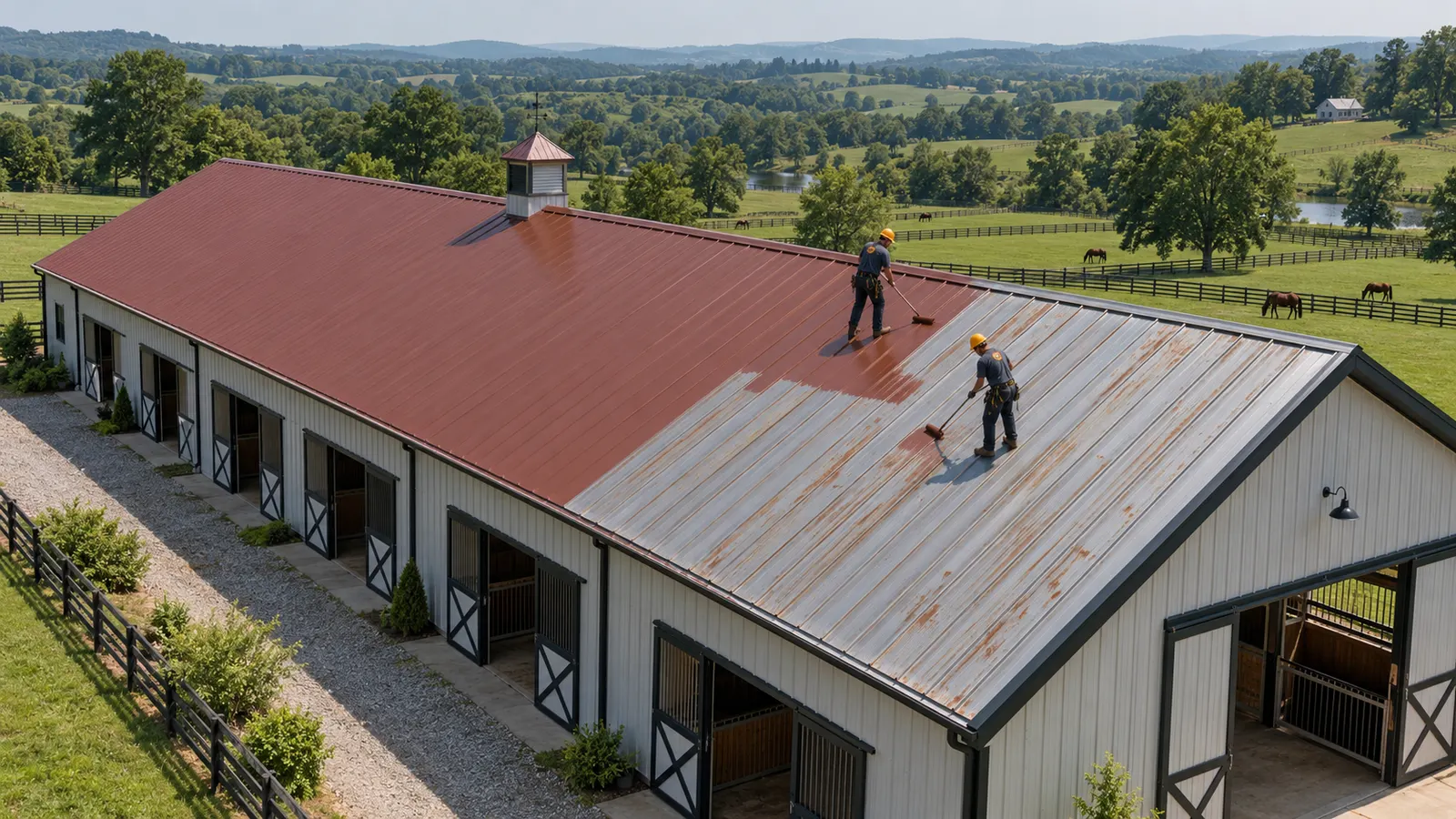
Steeper parts of the same building stay in the metal coating system, with primer and a topcoat chosen by pitch.
Metal roof coating in Lexington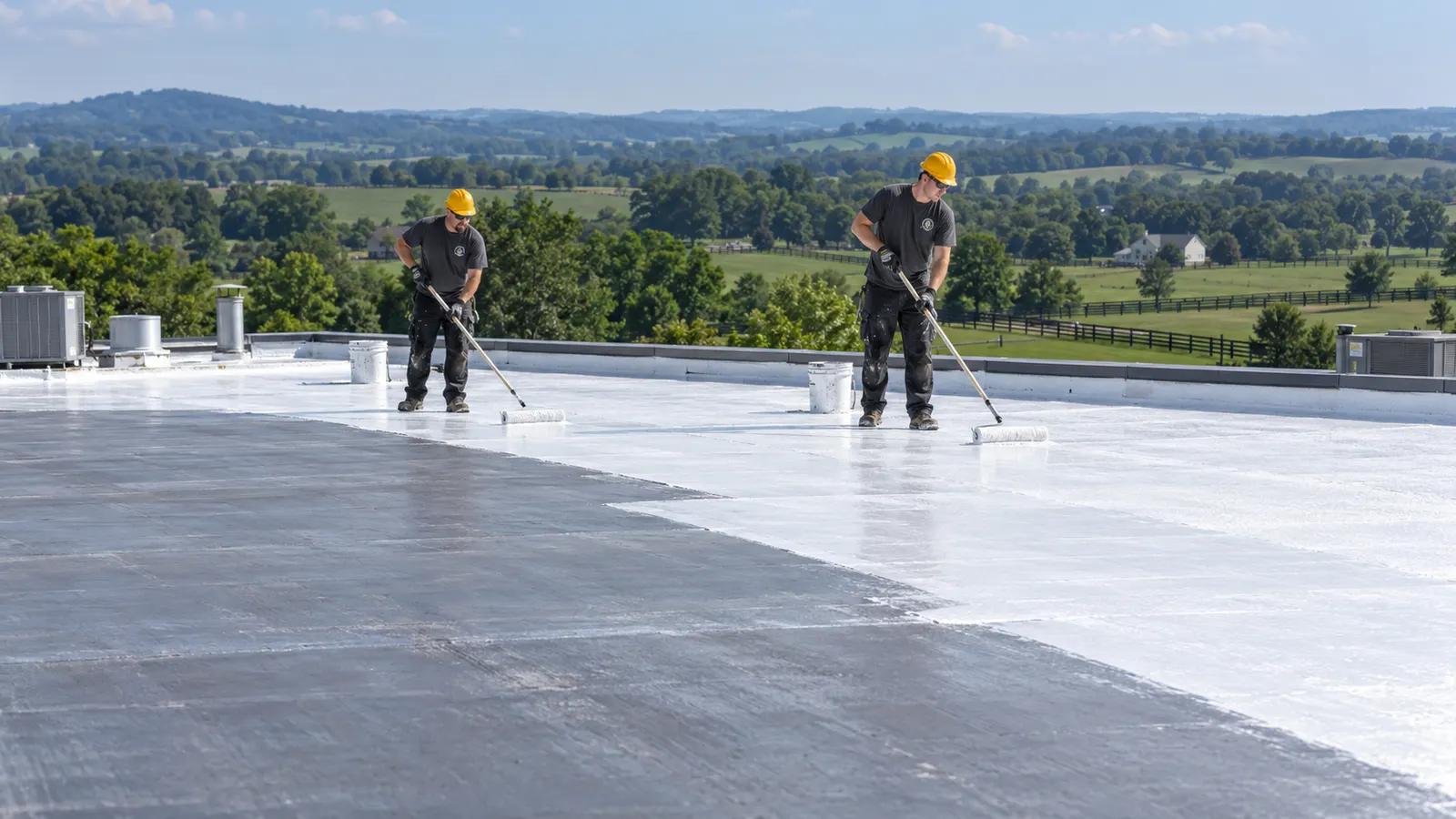
Roof sections that drain within an hour can take acrylic, which recoats easily and keeps its bright white longer than silicone.
Acrylic roof coating in Lexington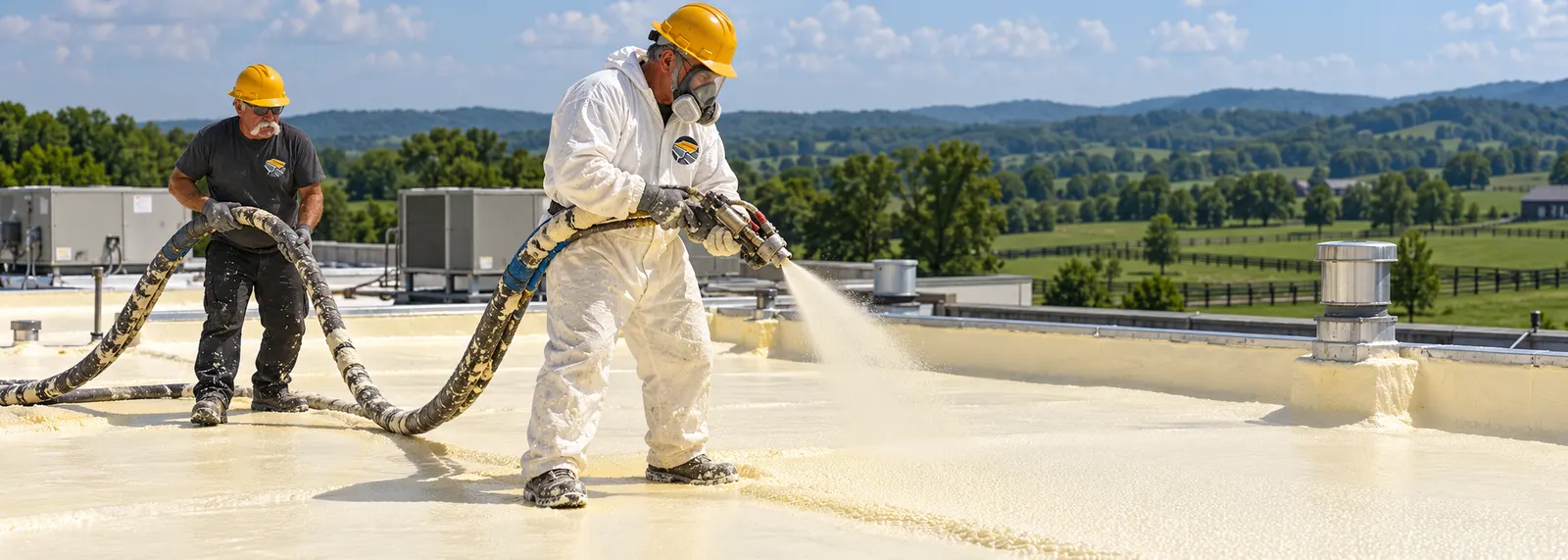
Foam adds insulation and a continuous layer under the silicone when the building runs hot in summer or drips condensation in winter.
Spray foam roofing in LexingtonWhat owners of low-pitch metal and flat roofs in Lexington ask before choosing silicone.
Fabric or butyl-backed seam tape is set into a base coat over each side lap and end lap, then the full silicone coat covers it. End laps get a wider band on low-pitch roofs, where water backs up under the upper sheet. The finished lap shows as a slightly raised strip.
Pick it when water still sits at end laps or gutters long after rain, since it resists breakdown under standing water. In exchange, later recoats are silicone too, the white dulls as dirt builds up, and the surface turns slick when wet, so walk paths go near rooftop units.
Check whether the coating cracked at the dents. Look at ridge caps and rake trim, skylight panels, fasteners near dents, and gutters for coating flakes. NWS Louisville issues severe weather warnings for Fayette County; photograph damage before cleanup and keep the photos with the storm date for an insurance claim.
Yes, after cleaning. Silicone bonds well to clean, firm silicone, so a worn silicone roof gets washed, patched where the old coat lifted, and recoated. Acrylic and most other products grip silicone poorly, which is why the first choice of silicone decides future recoats.
On bare or rusted steel, yes. A rust-inhibiting primer matched to the panel goes on first, and a small adhesion test on your actual panels confirms the bond before the full roof is coated. Clean, galvanized panels with sound zinc still get the test.
Rinsing the roof from time to time removes the dirt that dulls a silicone surface and lowers its reflectance. Mildew near trees and on shaded laps comes off with a mild cleaner. During the final walk we point out the spots that collect grit.
Send the roof size and where water sits, or call to talk it through.
Leave a name and number and we will call you back.
Or call now: (859) 204-8064