Drips On Cold Mornings
Warm, moist air inside a heated shop hits the cold underside of the panels and condenses. The drips fall in rows between fasteners, which tells them apart from roof leaks. Foam warms the panel underside and cuts the dripping.
Our spray foam roofing in Lexington puts closed-cell foam and a topcoat over commercial metal roofs to insulate the building, cut condensation drips, and cover every fastener.
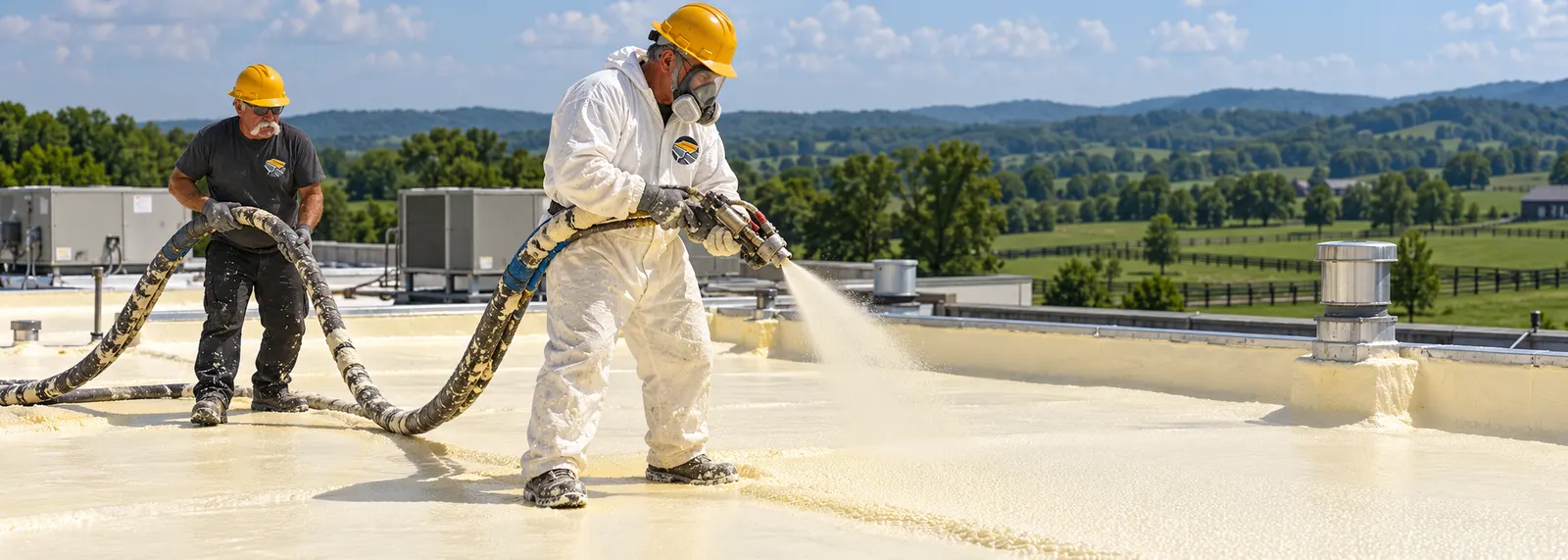
Foam is the bigger job. It pays off on buildings that need insulation or drip under the panels.
The R-6 per inch figure comes from a U.S. Department of Energy Building America spray foam guide.
These conditions point toward foam over the metal rather than a coating by itself.
Warm, moist air inside a heated shop hits the cold underside of the panels and condenses. The drips fall in rows between fasteners, which tells them apart from roof leaks. Foam warms the panel underside and cuts the dripping.
Little insulation under a metal roof lets heat through in winter and bakes the space in summer. Closed-cell foam adds about R-6 per inch on top of the panels, so a few inches change how the building feels.
Every exposed fastener is a possible leak on an R-panel roof. Foam buries them all under one continuous layer, so the screw lines stop depending on rubber washers.
Between the ribs, foam fills and levels the surface, which removes the low laps where water used to sit.
Ammonia and moisture from stalls rust panel undersides faster. Foam over the top keeps the panels warmer, and rusted purlins or undersides get repaired before any foam goes on.
Foam raises the roof surface, so gutters, eave trim, and flashings need new details. We plan those edges before spraying, since they decide how water leaves the roof.
Foam always gets a protective topcoat. These are the builds we spray on Lexington metal buildings.
Silicone over foam handles low spots and standing water well, and later recoats stay silicone.
On well-drained roofs, an acrylic topcoat over foam keeps a bright, reflective surface at a lower recoat cost.
Granules or a urethane layer protect the foam on paths to rooftop units, where boots would dent it.
Raised edges get new eave trim, extended gutters, and flashing at walls and curbs to match the added thickness.
How a metal building changes once foam and a topcoat replace bare, screw-down panels.
Foam work moves in sections, and every section is dry, clean, and repaired before the rig starts.
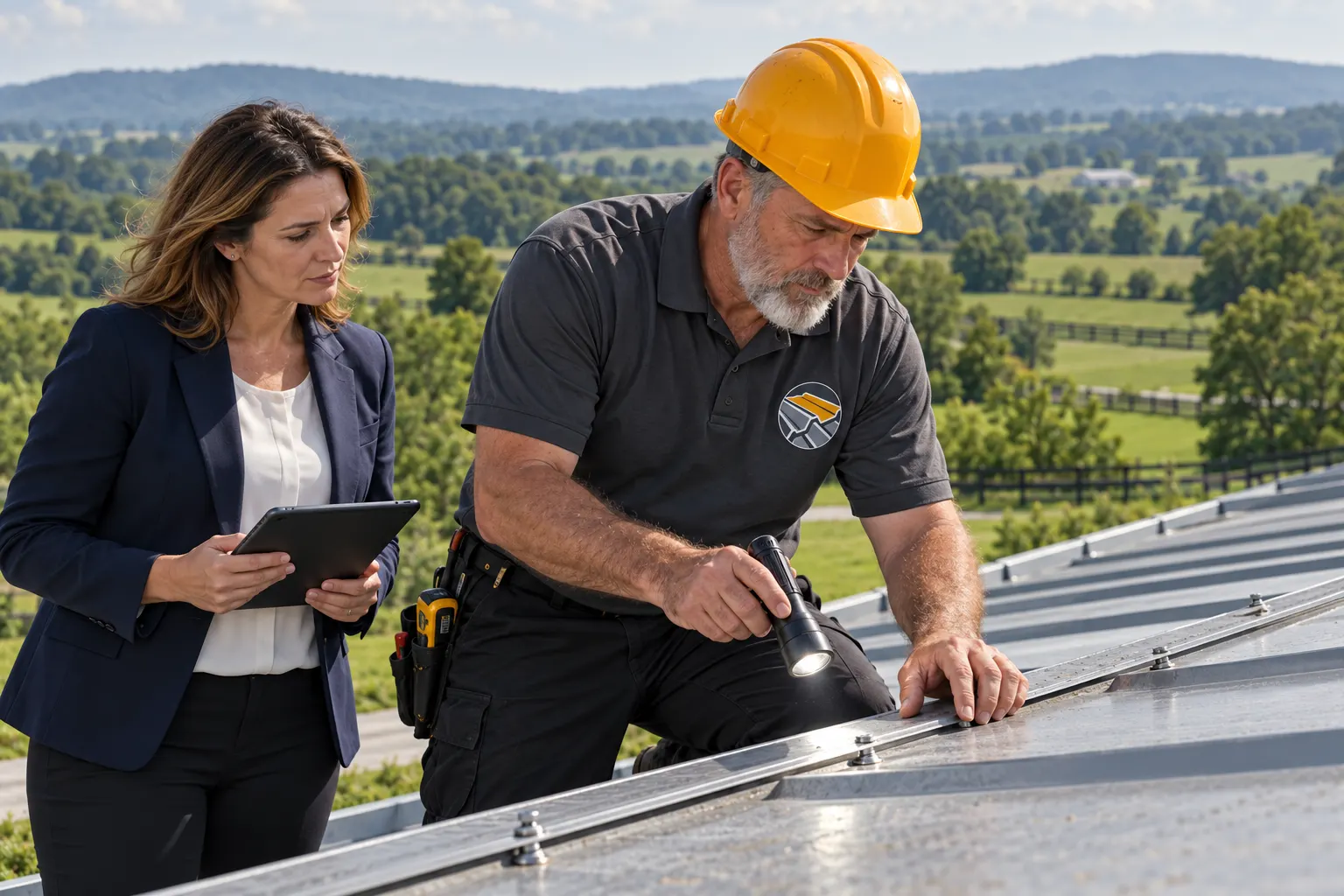
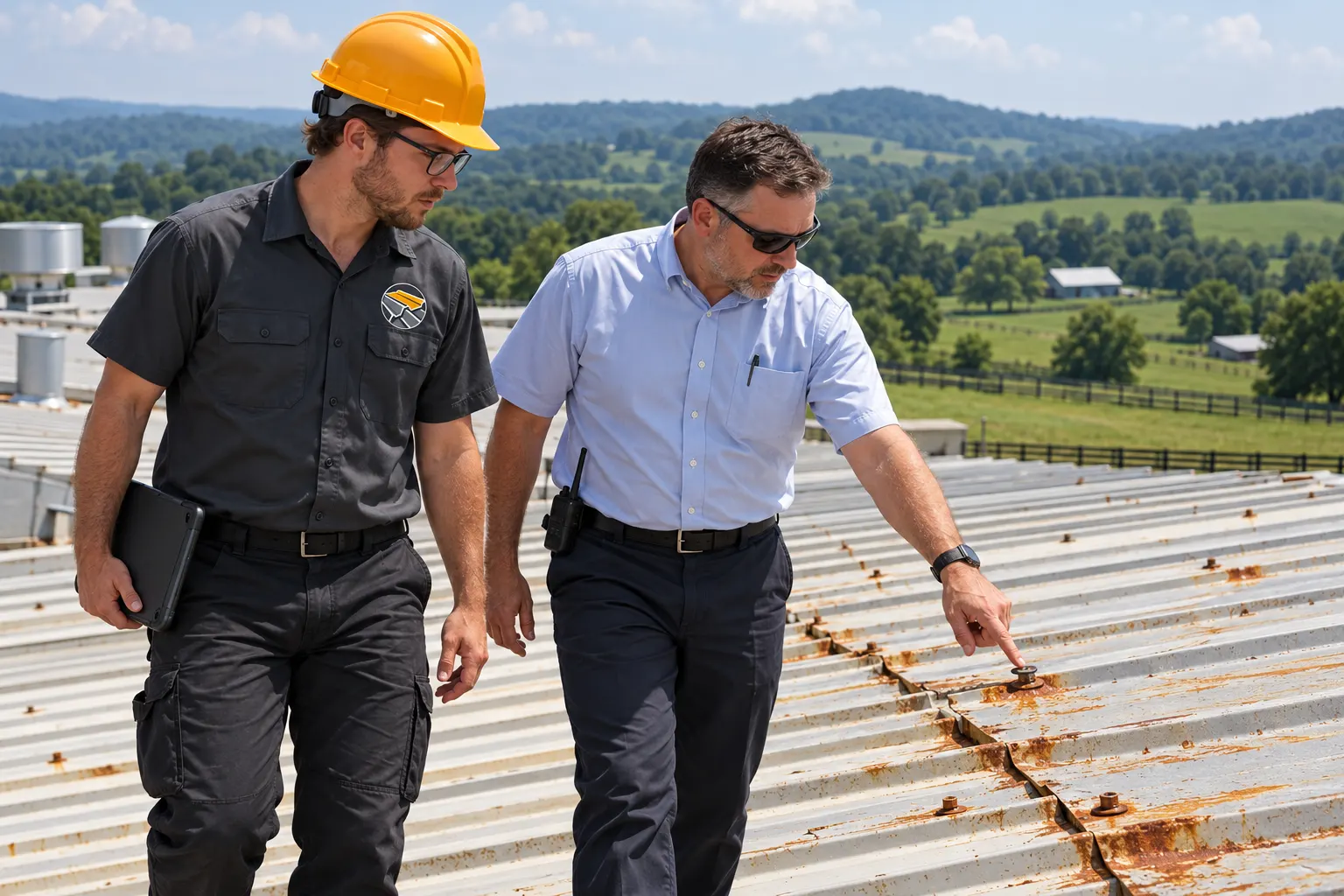
We check the panels, purlins, and insulation from above and below, read moisture where stains show, and measure the edges to plan new gutter and trim details.
Rust-through sheets are replaced, loose screws tightened, and rusted purlins repaired, since foam over weak steel only hides the problem.
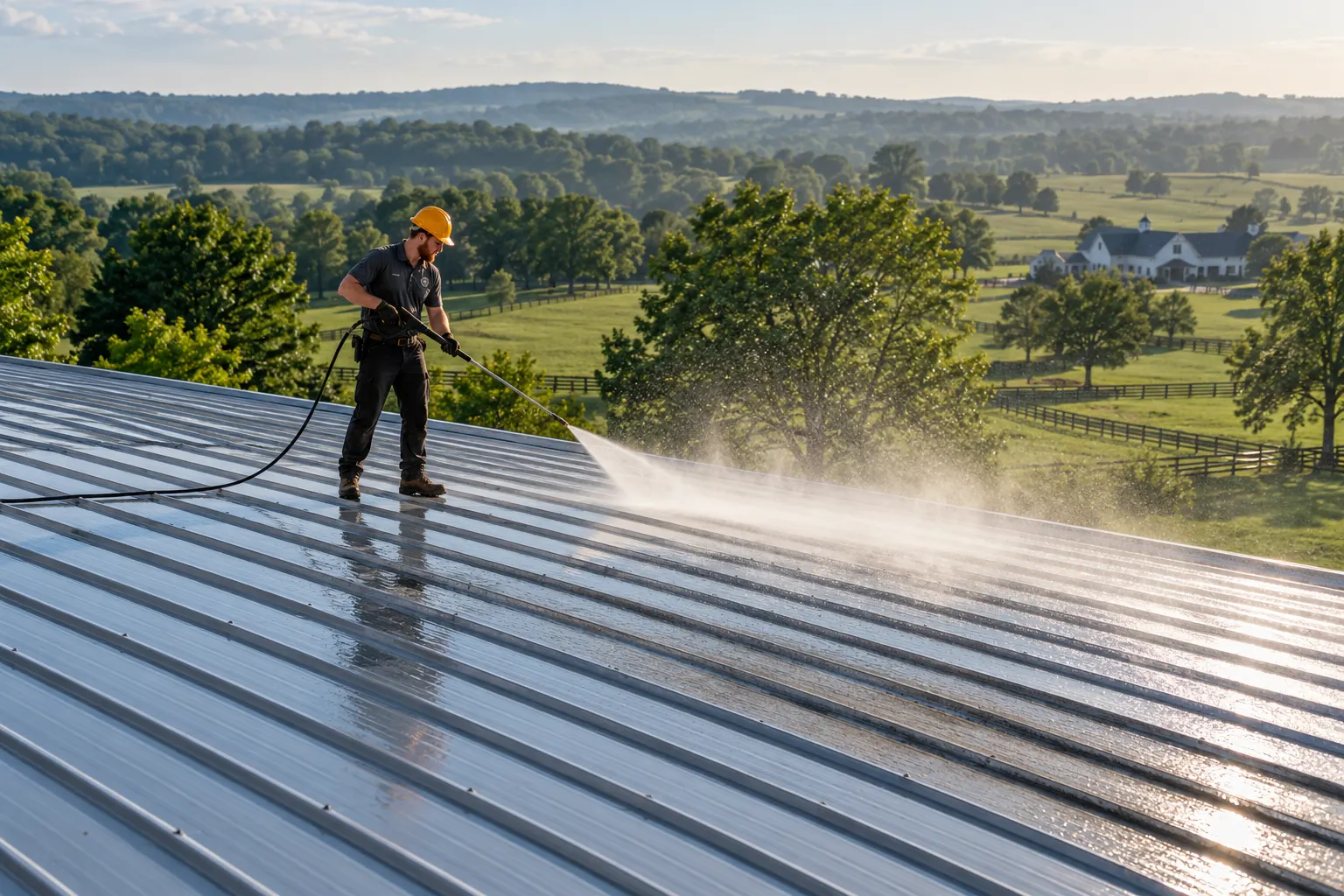
Panels are washed and left to dry fully. Foam needs a dry surface and the right weather to bond, which we confirm with a surface thermometer.
Closed-cell foam goes on in passes to the planned thickness, filling between ribs. Intakes on rooftop units are shut down and cars moved off the downwind side.
A topcoat goes over the foam the same week, with granules or urethane on walk paths and new edge metal at the gutters.
Some Lexington buildings do better with a coating alone. These are the systems we use instead or on top.
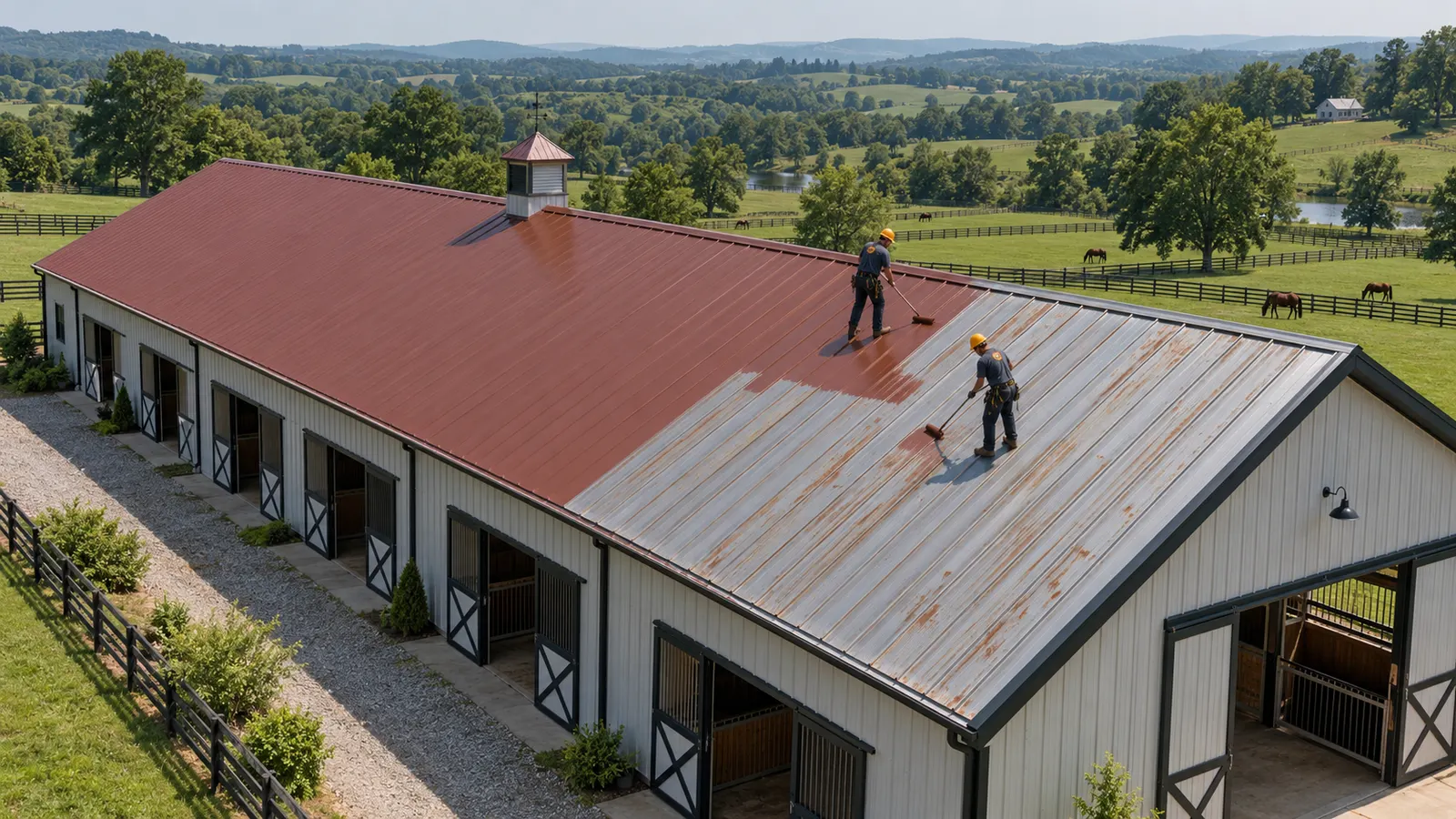
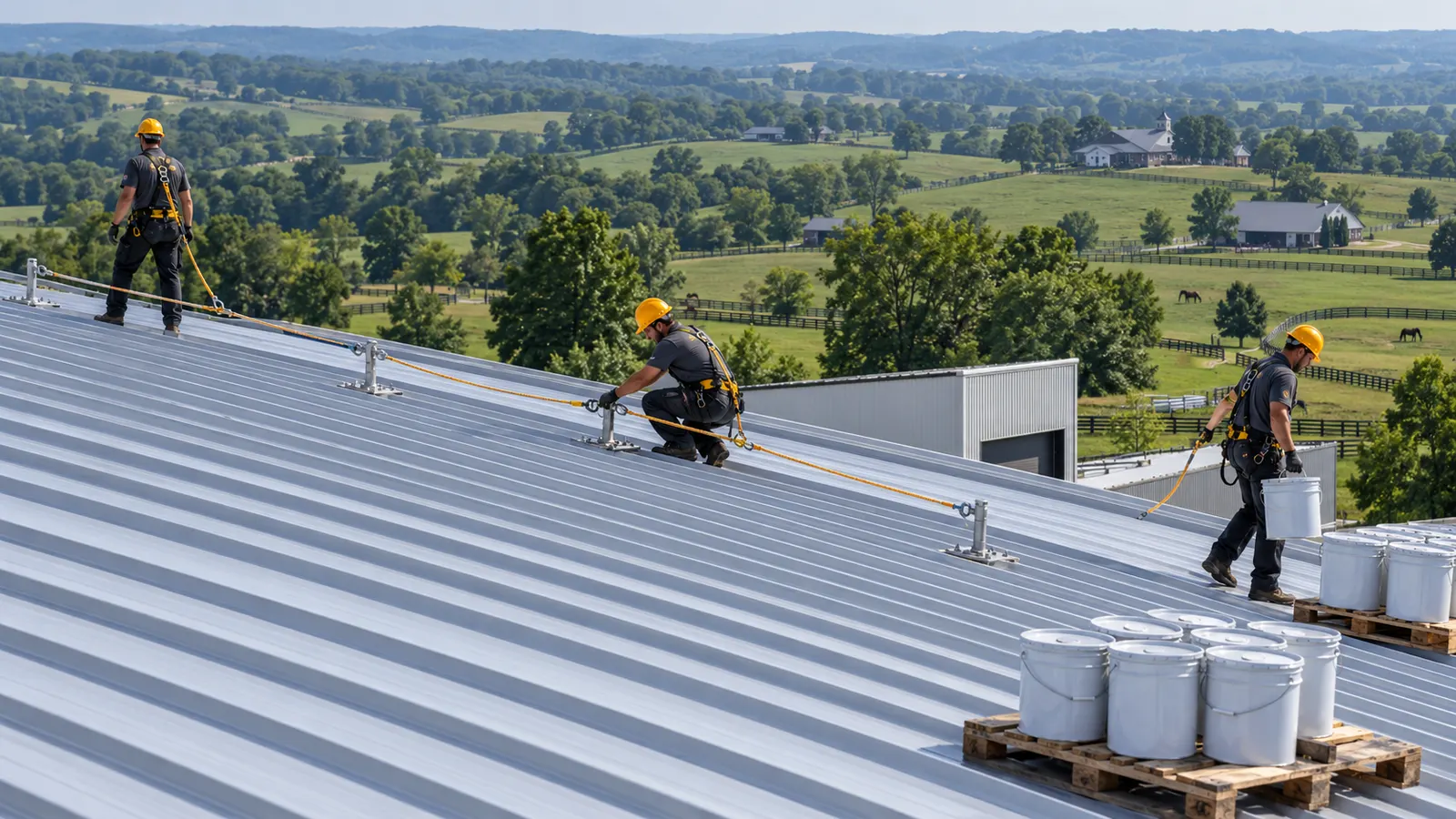
Unheated buildings with dry insulation usually skip foam and take our metal coating system: rust primer, sealed screws, fabric at the laps, and a topcoat.
Metal roof coating in Lexington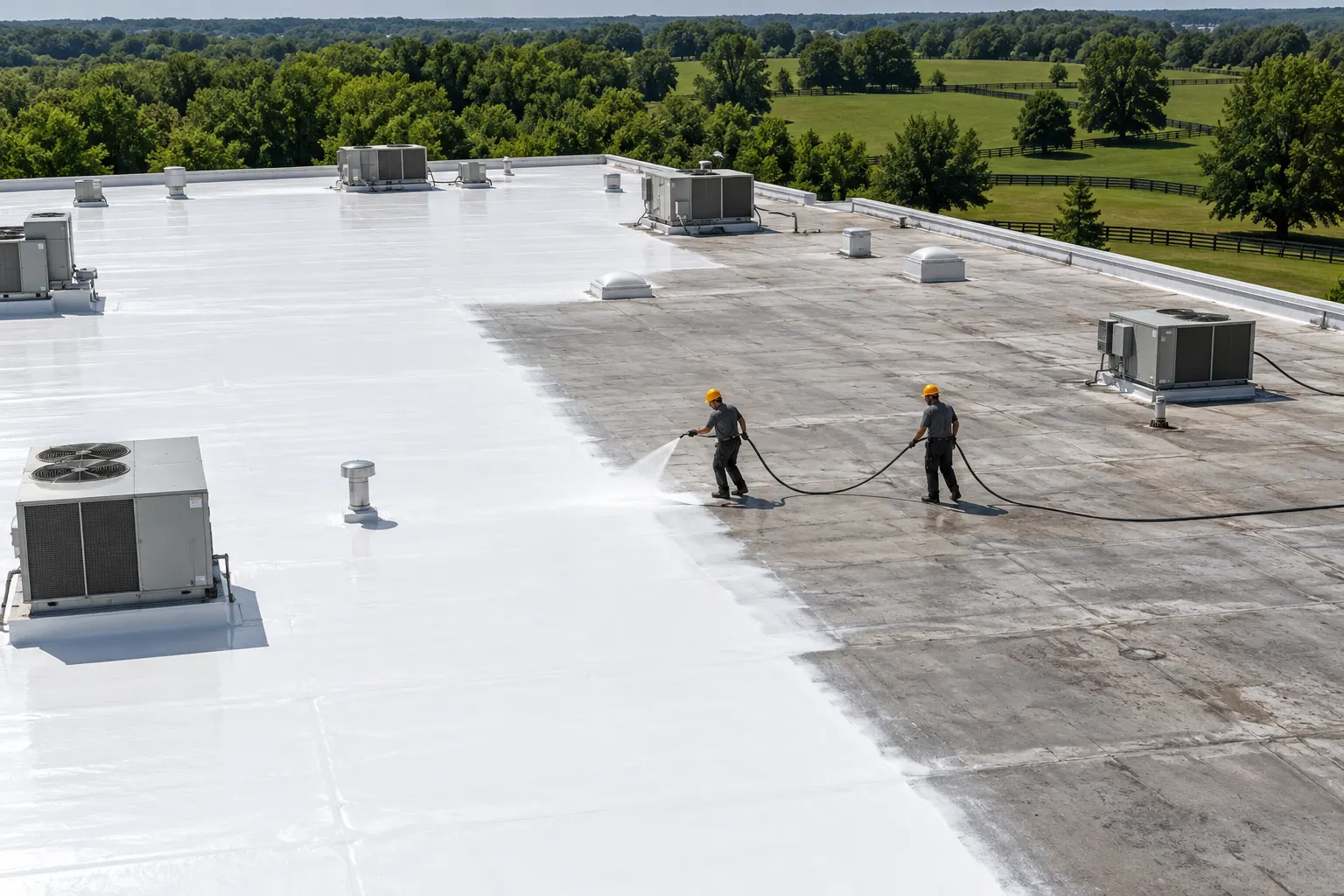
Silicone is the topcoat we choose most often over foam, because it handles any low spots left after spraying.
Silicone roof coating in Lexington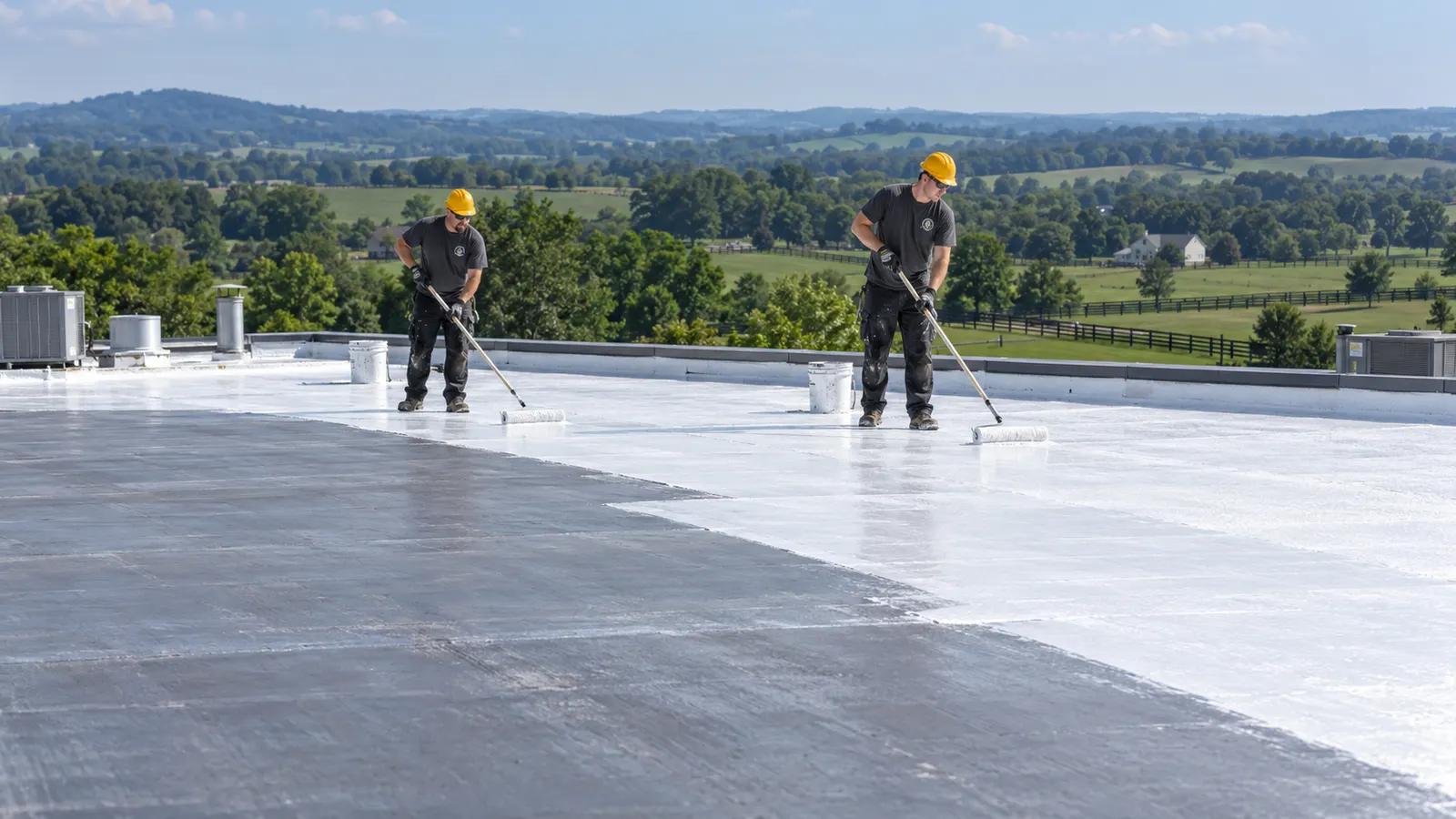
Foam on a well-drained roof can take an acrylic topcoat instead, at a lower cost when it is time to recoat.
Acrylic roof coating in LexingtonWhat Lexington owners ask before adding foam over a metal roof.
It depends on the building. Foam adds insulation, about R-6 per inch for closed-cell according to a Department of Energy guide, and levels the ribs into one layer over every lap and screw. A coating alone fits roofs whose insulation is already dry and working, and it keeps the edge at its current height.
Dry panels, mild temperatures, and no rain during the cure window. Each product lists limits for temperature, humidity, and dew point spread. Kentucky panels collect heavy dew on clear nights, so we wait for them to dry, and panels baking in afternoon sun run too hot, so summer work starts early.
Yes, once rust, fasteners, and ventilation are checked. Fayette County's Purchase of Development Rights program has protected more than 33,000 acres of farmland, which keeps many working barns in use. Ridge vents and cupolas stay open and masked, horses stay out until fumes clear, and rusted purlins get repaired first.
Thickness is set by the insulation the building needs and the slope we want to keep for drainage, measured with a probe as we spray. Thicker foam raises the edge more, so gutter and trim details are planned around the final number.
Often, yes. Foam that raises the roof edge or changes the fire-rated assembly tends to draw review. In Lexington, that review goes through the LFUCG Division of Building Inspection; tell them the planned foam thickness and the topcoat.
Units near the active section are shut off at their disconnects, and their intakes are covered so fumes stay outside. Curbs get foamed up their sides and flashed, and condensate lines are raised so the foam seals underneath.
Send the roof size and whether it drips inside, or call and talk it over.
Leave a name and number and we will call you back.
Or call now: (859) 204-8064